Savannah, Georgia, has emerged as a leading city for senior living and at-home care solutions. With a growing elderly population, approximately 18% of Savannah’s residents are aged 65 and above. Families are increasingly seeking innovative ways to provide care at home. The evolution of healthcare technology management is now enabling a new standard of home care where seniors can receive monitoring, treatment, and personalized care without frequent hospital visits. According to the Home Health Care News 2024 report, adoption of smart home healthcare devices is expected to increase by 56% in Savannah over the next five years, reflecting a strong trend toward tech-enabled care.
Local families looking for Home Care Savannah options are now benefiting from solutions like remote vital monitoring, AI-driven care alerts, telehealth consultations, and wearable devices. These tools allow caregivers to proactively track health trends and intervene before emergencies occur, ultimately enhancing quality of life for seniors.
Key Benefits of Incorporating Technology in At-Home Care in Savannah
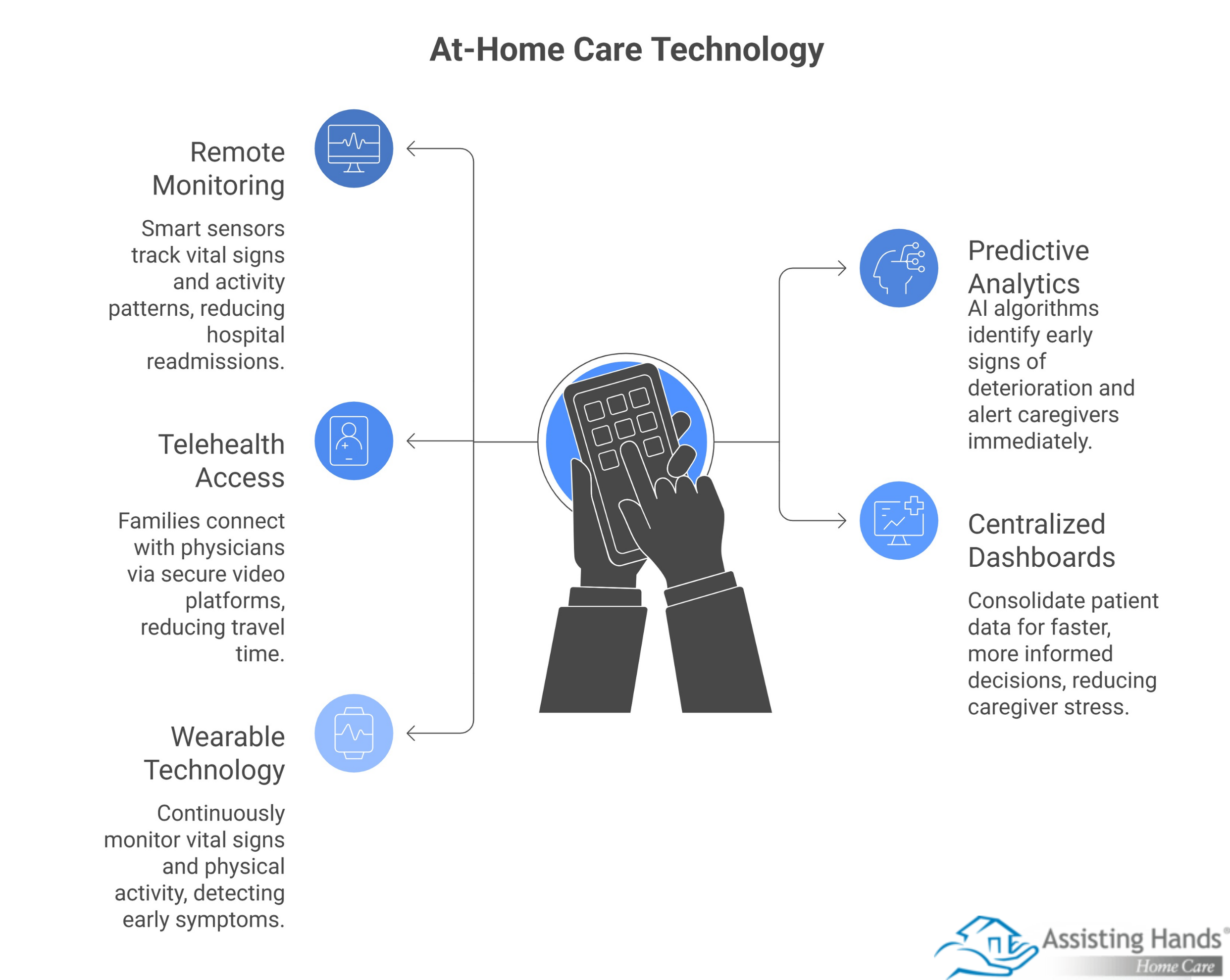
- Remote monitoring – Smart sensors track heart rate, oxygen levels, blood pressure, sleep, and activity patterns, reducing hospital readmissions by up to 30%.
- Predictive analytics – AI algorithms can identify early signs of deterioration, such as sudden changes in vitals, and alert caregivers providing live-in care immediately.
- Telehealth access – Families can connect with physicians and specialists via secure video platforms, reducing travel time and healthcare costs.
Caregivers in Savannah increasingly rely on centralized dashboards that consolidate patient data, allowing for faster, more informed decisions. This integration not only saves time but also reduces caregiver stress, enabling personalized care for seniors with chronic conditions, such as diabetes, heart disease, and Alzheimer’s.
Wearable Technology: The Future of Home Healthcare
The future of wearable technology in healthcare is poised to revolutionize the way Savannah families care for their senior loved ones. Wearable devices, ranging from smartwatches to biosensor patches, continuously monitor vital signs and physical activity. Advanced wearables can now detect early symptoms of dehydration, irregular heart rhythms, and even cognitive changes in Alzheimer’s patients.
For seniors receiving Alzheimer’s care, continuous monitoring is particularly critical. Wearable GPS trackers and movement sensors help caregivers prevent wandering incidents, while AI-driven analytics track behavioral changes that may indicate the progression of the disease. These tools allow families to maintain independence for their loved ones while ensuring safety.
Using Wearable Technology in Home Care in Savannah
| Technology Type | Savannah Usage 2024 | Projected Usage 2028 | Benefits for Seniors & Caregivers |
| Smart Health Wearables | 39% | 65% | Tracks vitals, activity, and sleep patterns |
| Remote Blood Pressure Sensors | 31% | 54% | Manages hypertension & cardiac risk |
| AI Fall Detection | 26% | 60% | Reduces fall-related injuries and ER visits |
| Smart Medication Dispensers | 18% | 48% | Ensures medication adherence |
| Cognitive Monitoring Devices | 12% | 35% | Tracks memory and behavioral changes for Alzheimer’s care |
These numbers reflect not just technological innovation but a growing acceptance of home care solutions that integrate seamlessly into daily life.
Challenges of Technology in At-Home Care
Despite clear benefits, there are some disadvantages of technology in healthcare when implemented at home:
- Data privacy & security – Storing sensitive health information on cloud platforms exposes seniors to potential breaches.
- Device complexity – Some seniors may face difficulty using multiple devices without caregiver assistance.
- Connectivity issues – Stable internet is essential for real-time monitoring, which can be a barrier in certain Savannah neighborhoods.
- Cost concerns – Advanced devices and subscription services can be expensive, limiting accessibility for some families.
However, these limitations are gradually being mitigated through government subsidies, caregiver training programs, and user-friendly device designs tailored for older adults.
How Technology Supports Different Home Care Models
Savannah has a diverse set of home care options, and technology supports each model differently:
- Live-in care in Savannah – AI dashboards monitor multiple patients simultaneously, providing real-time alerts to caregivers.
- Part-time home care – Telehealth and wearable devices allow caregivers to track their loved ones’ health remotely when not physically present.
- Specialized Alzheimer’s care – Continuous cognitive and behavioral tracking devices can prevent incidents like wandering and medication errors.
This integration of technology ensures seniors receive tailored care regardless of the model chosen while families maintain peace of mind.
The Broader Impact of Technology on Savannah Healthcare
- Reduced hospital strain – Fewer emergency visits and readmissions mean local hospitals can focus on critical cases.
- Enhanced care quality – Real-time monitoring ensures medical interventions are timely, reducing complications.
- Empowered caregivers – Technology reduces manual workload, allowing caregivers to focus on emotional support and human interaction.
- Data-driven insights – Aggregated health data helps local health authorities identify trends, plan resources, and improve community health outcomes.
The combination of smart devices, predictive analytics, and telehealth is creating a holistic ecosystem where seniors can age in place safely and efficiently.
The Future Outlook for Savannah At-Home Care
Looking ahead, the future of healthcare in Savannah will likely involve:
- Expanded wearable device capabilities with integration to city health networks
- Predictive AI models that can foresee health issues before symptoms arise
- Virtual reality (VR) and augmented reality (AR) for cognitive therapy and mobility training
- Integration of robotics for medication delivery, mobility assistance, and companionship for isolated seniors
By 2030, it’s projected that over 70% of seniors in Savannah receiving home care will use at least one connected healthcare device, highlighting the city’s rapid shift toward tech-enabled at-home care.
Savannah is at the forefront of a home-care revolution. Advanced healthcare technology management, AI-driven wearables, and telehealth platforms are transforming how families care for seniors. From home care to specialized Alzheimer’s care, technology empowers caregivers to provide safer, smarter, and more personalized care. While challenges like cost, connectivity, and privacy remain, ongoing innovations and local initiatives continue to make at-home care more accessible and effective. The next decade promises a fully integrated, proactive, and empowering healthcare ecosystem for Savannah’s senior population.