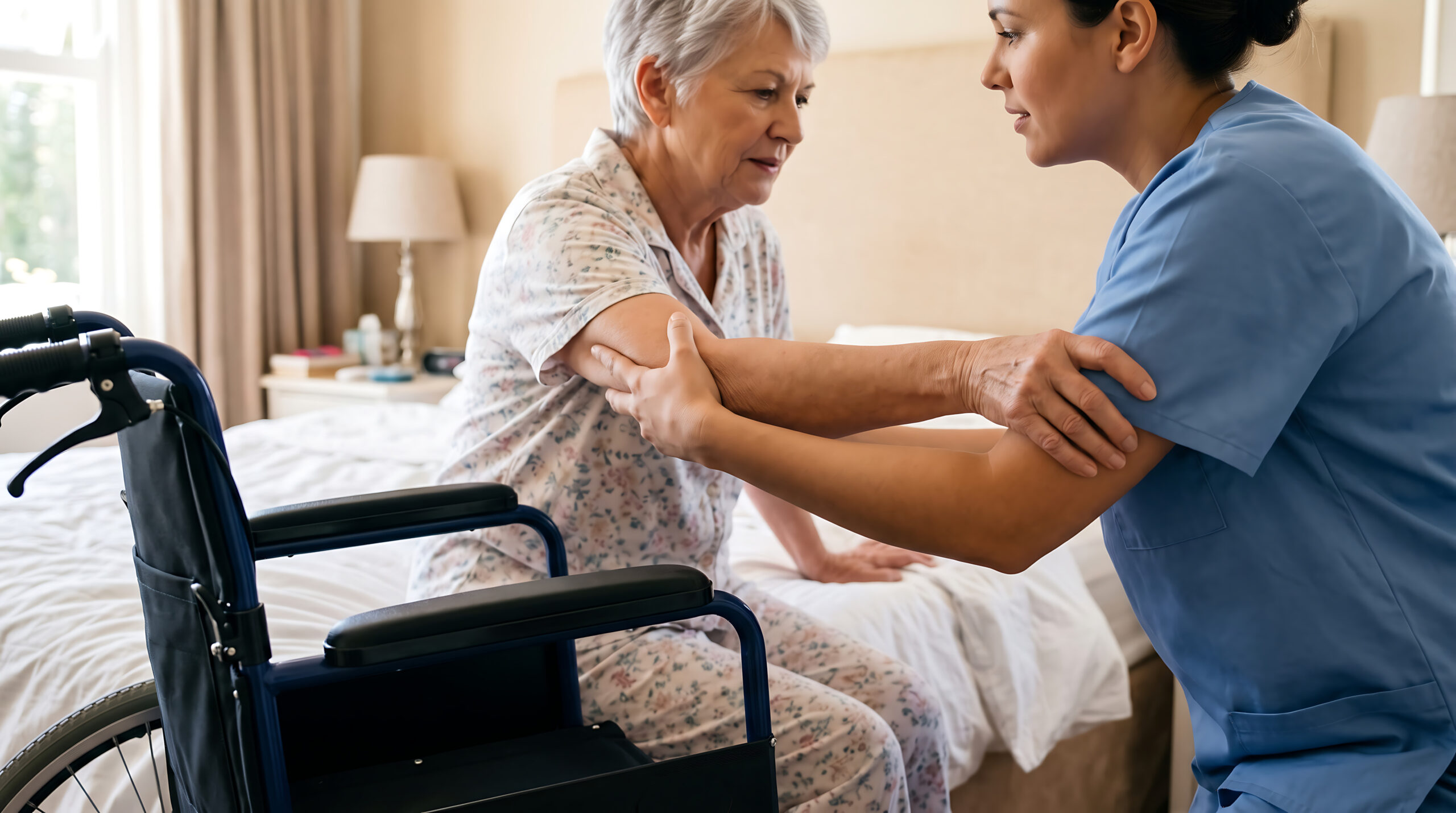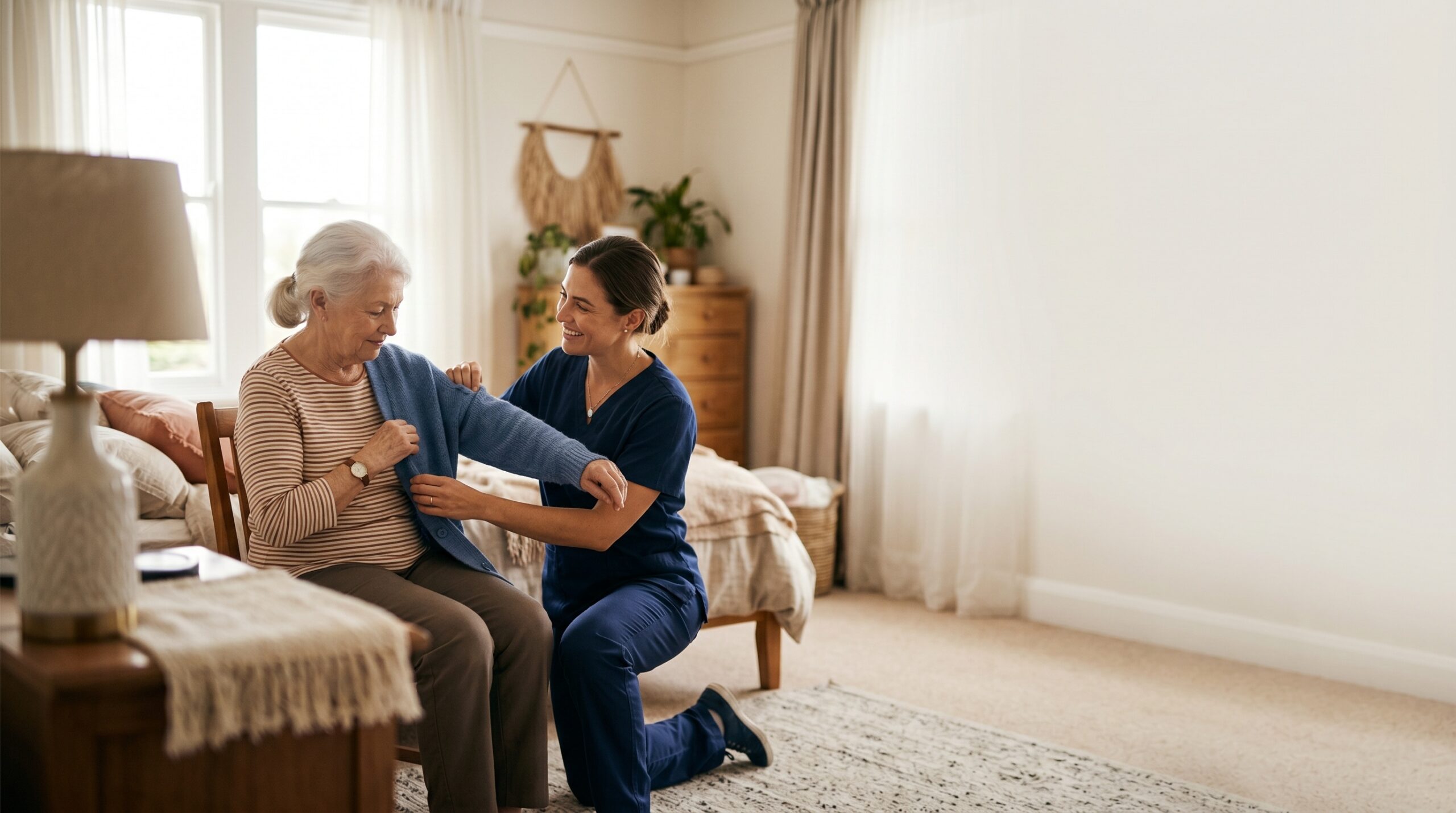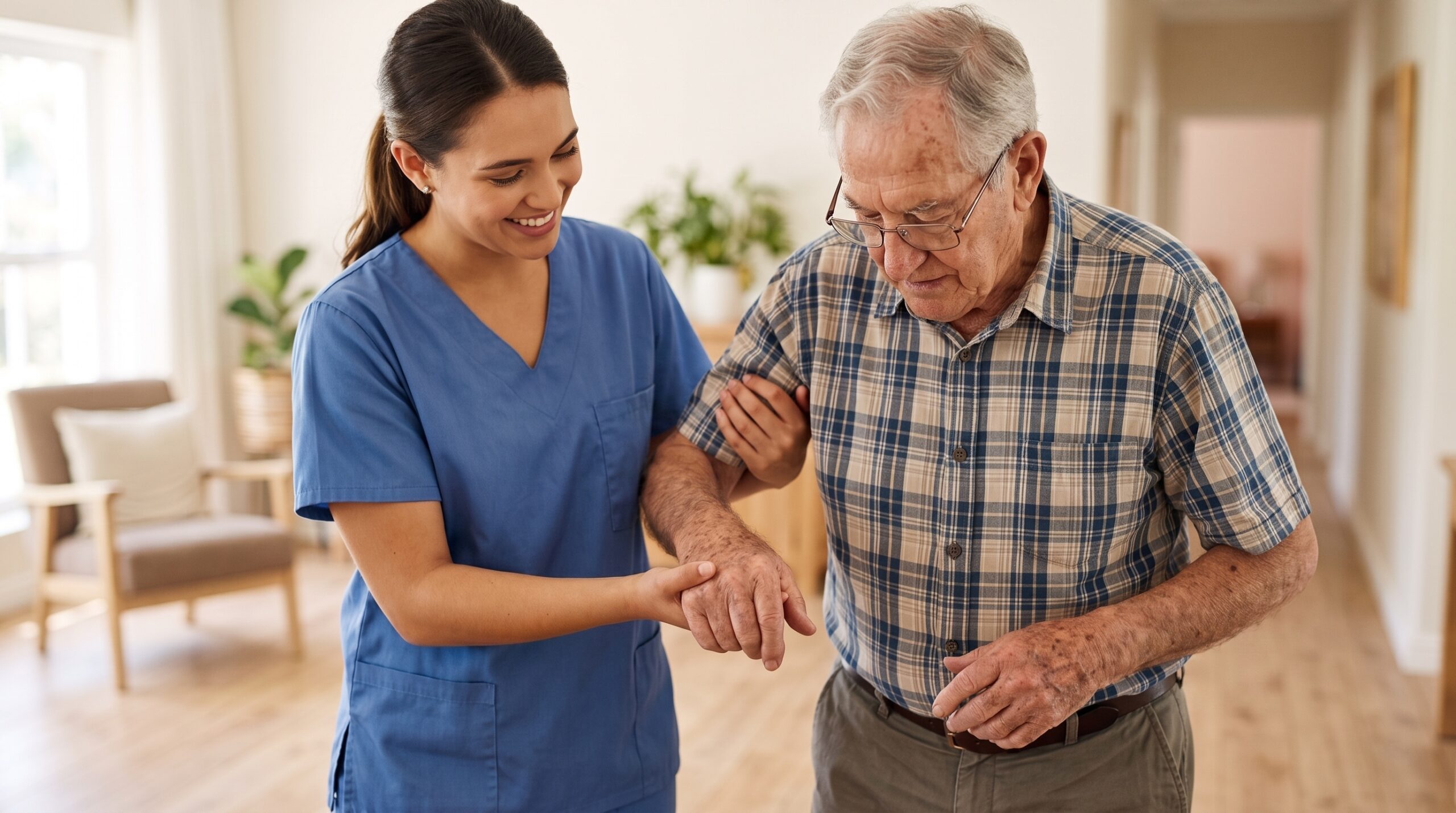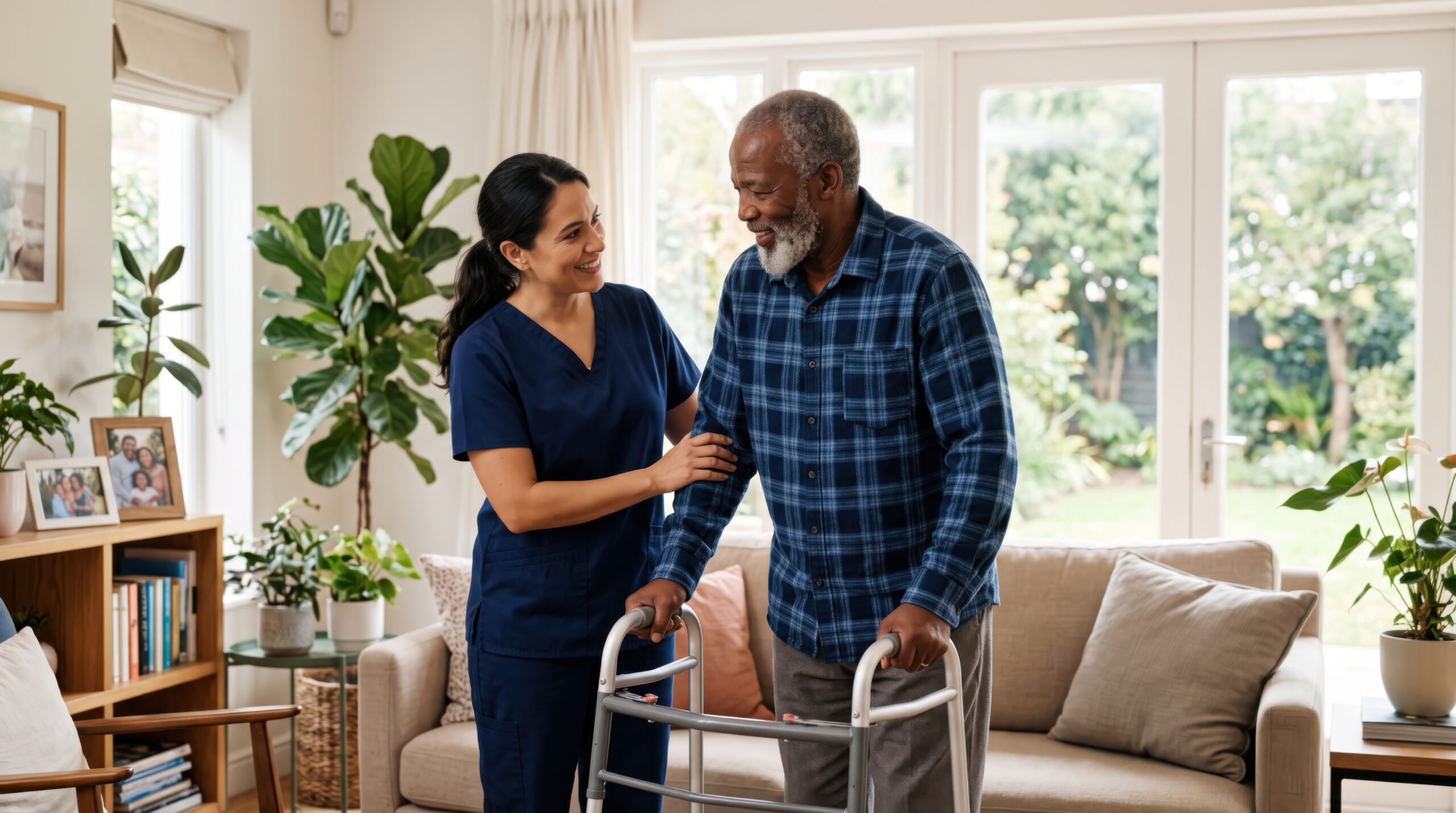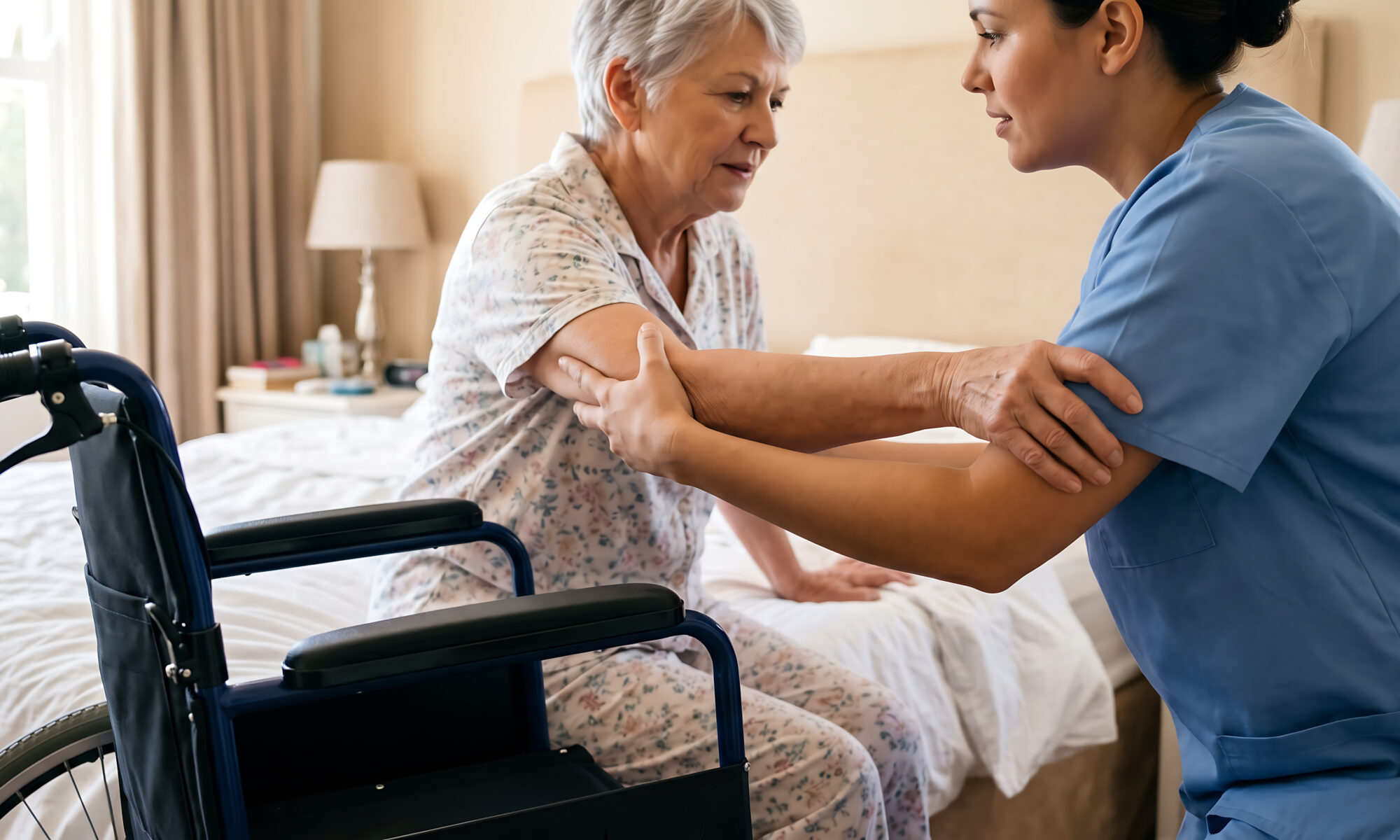
Safe transfer techniques are the methods caregivers use to help individuals move between positions, surfaces, or locations with minimal risk of falls or injuries. Mastering these techniques is one of the most important skills a home caregiver can develop.
What Are the Most Common Types of Transfers in Home Caregiving?
Home caregivers regularly perform several types of transfers, each requiring a slightly different approach:
- Bed to wheelchair – Moving a person from a lying position to a seated one in a wheelchair
- Wheelchair to toilet or shower chair – Assisting with bathroom transitions
- Chair to standing – Helping someone rise from a seated position
- Floor to chair – Assisting someone who has fallen safely back to a seated position
If you’re the primary family caregiver for an elderly loved one, 24-hour home care for Savannah seniors is available around the clock if your loved one’s health has become too difficult to manage without professional expertise. At Assisting Hands Home Care, we take measures to help seniors prevent illness and injury by assisting with exercise and mobility, preparing nutritious meals, helping with bathing and other personal hygiene tasks, and much more.
What Body Mechanics Should Caregivers Use during Transfers?
Proper body mechanics protect both you and the person in your care. Follow these principles:
- Keep your back straight and bend at the knees, not the waist.
- Position your feet shoulder-width apart for a stable base.
- Keep your loved one close to your body to reduce strain.
- Avoid twisting—pivot your feet instead of rotating your spine.
- Engage your core muscles throughout the movement.
What Assistive Devices Can Make Transfers Safer?
The right equipment significantly reduces injury risk and physical effort:
- Gait belts – Worn around the care recipient’s waist, giving caregivers a secure grip
- Transfer boards – Smooth, rigid boards that bridge the gap between two surfaces (e.g., bed to wheelchair)
- Grab bars and bed rails – Fixed supports the care recipient can hold during transitions
- Mechanical lift systems – Ideal for individuals who cannot bear weight and require full support
- Nonslip footwear and mats – Reduce the risk of slipping during standing transfers
A trained caregiver with experience in caring for seniors with mobility limitations can be a fantastic resource for family members. Savannah senior home care experts are available to provide high-quality care to seniors on an as-needed basis. From assistance with mobility and exercise to providing transportation to the doctor’s office and social events, there are a variety of ways professional caregivers can help your aging loved one continue to live independently.
How Should Caregivers Communicate during Transfers?
Clear communication makes every transfer smoother and safer:
- Explain each step before it happens so your loved one knows what to expect.
- Use a countdown (e.g., “On three, we’ll stand together. One, two, three”).
- Ask for feedback throughout the process to check comfort and pain levels.
- Encourage participation. Even small contributions, like pushing off with the hands, reduce caregiver strain.
- Stay calm and reassuring, particularly if your loved one feels anxious or unsteady.
How Can Caregivers Reduce the Risk of Falls during Transfers?
Fall prevention starts before the transfer begins:
- Clear the path of any obstacles, cords, or rugs.
- Lock wheelchair brakes and stabilize any surface being transferred to or from.
- Ensure proper lighting in the room.
- Never rush. Slow, deliberate movements are safer than quick ones.
- Know your limits. If a transfer feels unsafe alone, use a mechanical aid or ask for assistance.
Caring for senior loved ones can be rewarding, but it can also be overwhelming. Family caregivers need to care for their own wellbeing. If you’re caring for an aging loved one and are feeling overwhelmed, consider hiring a professional caregiver to provide hourly, live-in, or overnight home care Savannah families can trust. To prevent burnout, you can turn to Assisting Hands Home Care. One of our professional caregivers can assist your loved one at home while you take a nap, go to work, or run errands. Call one of our dedicated Care Specialists today to learn about the high quality of our in-home care services.
Frequently Asked Questions
What’s the safest way to transfer someone who cannot bear weight?
+
A mechanical lift, such as a Hoyer lift, is the safest option for individuals who are fully non-weight-bearing, as it removes the need for manual lifting entirely.
How do I prevent back injuries as a home caregiver?
+
Always bend at your knees, keep your back straight, and position your loved one as close to your body as possible before initiating any movement.
What is a gait belt and when should I use one?
+
A gait belt is a sturdy strap fastened around the care recipient’s waist to give you a secure, safe grip during transfers. Use one whenever assisting someone to stand, walk, or reposition.
How many people does it take to safely perform a transfer?
+
Many transfers can be done by one caregiver, but those involving larger individuals or complex positioning may require two people to ensure safety for everyone involved.
What should I do if my loved one starts to fall during a transfer?
+
Don’t try to catch or hold your loved one up. Instead, guide him or her gently to the floor using your body weight to slow the descent, then assess for injuries before helping him or her up.-9