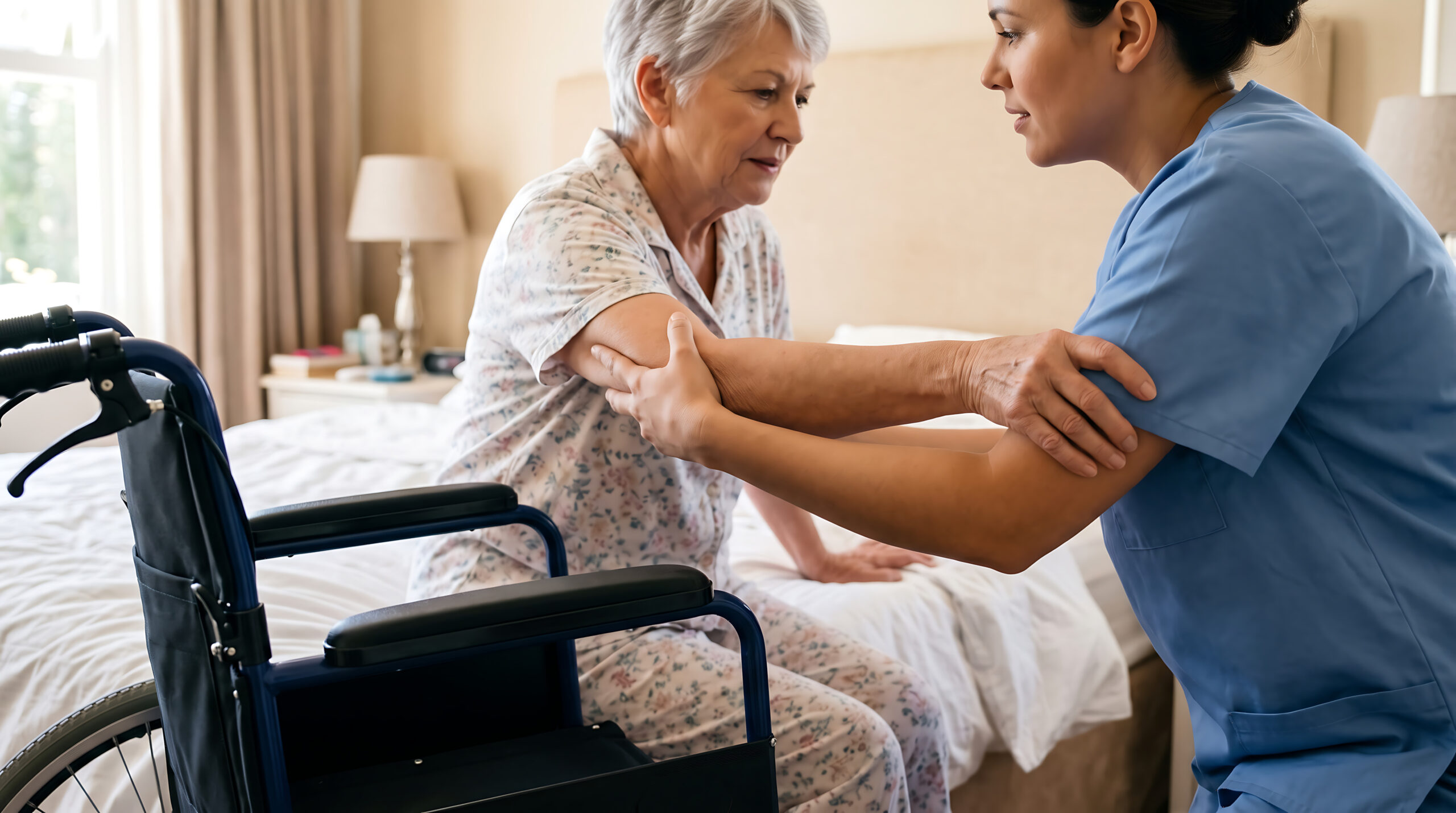
In-home care helps seniors with vision or hearing loss by improving home safety, assisting with daily tasks, enhancing communication, and reducing isolation. Sensory loss can drastically alter how an older adult interacts with the world, turning a familiar home into a place filled with potential hazards and frustrations. In-home care provides a vital bridge for seniors facing these challenges, offering the personalized support that allows them to maintain independence while navigating sensory challenges more safely and confidently.
How Does In-Home Care Enhance Safety and Reduce Fall Risk?
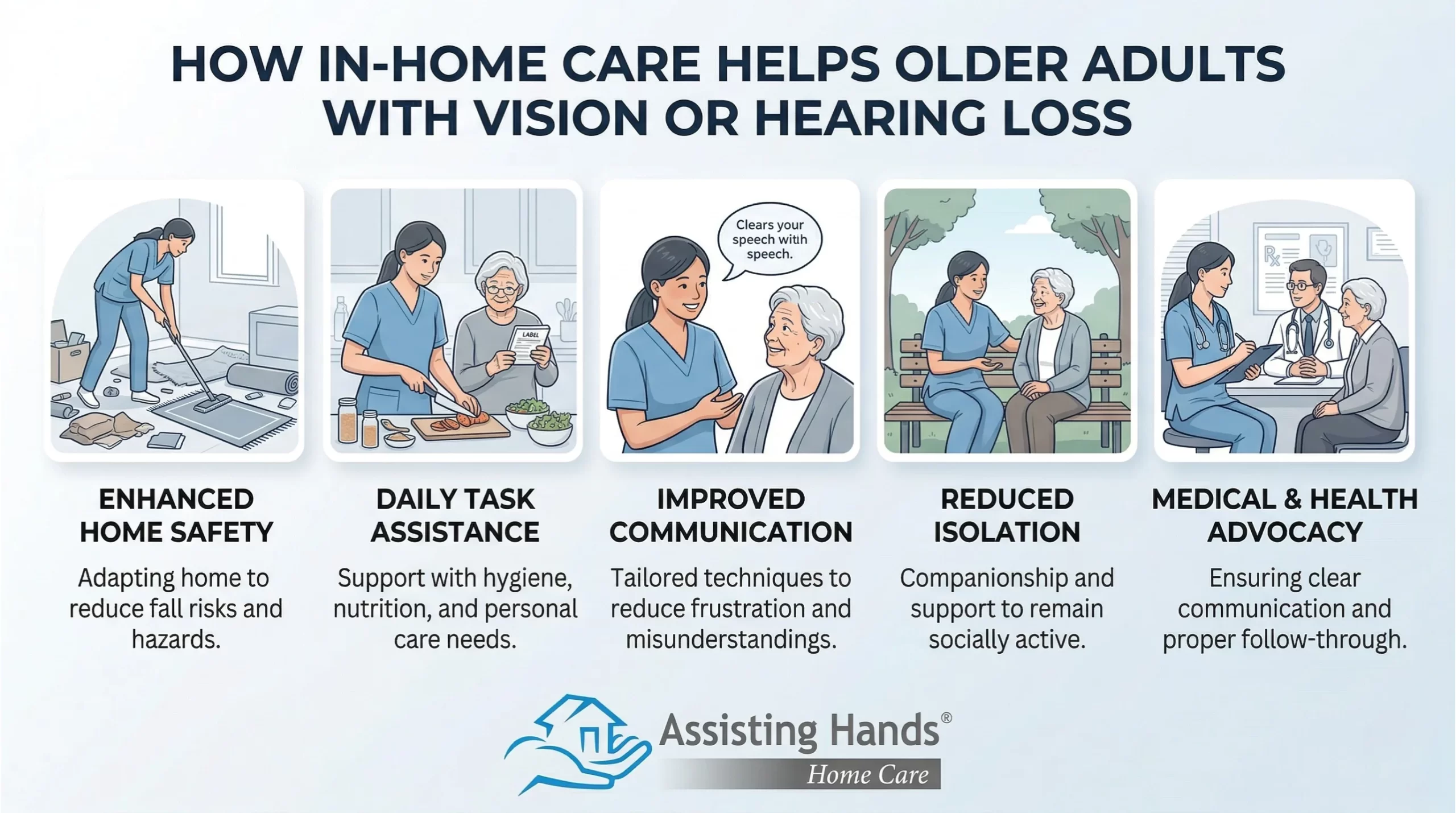
Caregivers reduce fall risks and hazards by adapting the home environment to accommodate limited vision or hearing. One of the most immediate risks associated with vision loss is the increased likelihood of falls and injuries. Seniors with compromised sight may not see obstacles, changes in flooring levels, or spills. Similarly, those with hearing loss might miss audible warnings like smoke alarms, doorbells, or even the sound of running water.
In-home caregivers play a crucial role in mitigating these risks by maintaining safe environments. They can conduct safety assessments and implement practical changes, such as:
- Decluttering pathways – Removing loose rugs, cords, and unnecessary furniture to create clear walking paths
- Improving lighting – Ensuring high-traffic areas are well lit and replacing burnt-out bulbs immediately
- Visual and tactile cues – Organizing the home so items are always in the same place and utilizing appliances with tactile markers
- Auditory safety – Ensuring smoke detectors have strobe light attachments or vibration alerts for those who cannot hear standard alarms
Vision and hearing impairments can have a major effect on the ability to perform everyday tasks, but help is just a phone call away. Some seniors only require help with a few daily tasks so they can maintain their independence. However, those living with serious illnesses may need more extensive assistance. Luckily, you can rely on the exceptional professional Savannah 24-hour care provided by Assisting Hands Home Care. Home can be a safer and more comfortable place for your loved one to live with the help of an expertly trained and dedicated around-the-clock caregiver.
How Can Caregivers Assist with Daily Tasks and Personal Care Needs?
Support with daily activities ensures seniors can maintain hygiene, nutrition, and dignity despite sensory challenges. Routine tasks that once seemed simple—like reading a prescription bottle, sorting mail, or cooking a meal—can become dangerous or impossible with sensory impairment. Vision loss makes it difficult to distinguish between similar-looking medications or spot spoiled food in the refrigerator. Hearing loss can result in missed timers or boiling pots going unnoticed.
Caregivers act as the eyes and ears for their clients, handling tasks that require acute sensory input. This assistance ensures nutrition and hygiene standards are maintained. Support often includes:
- Reading aloud mail, newspapers, and instructions
- Assisting with grooming tasks, such as shaving or applying makeup, where mirrors might no longer be helpful
- Meal preparation, ensuring ovens are turned off and food is cooked safely
- Organizing wardrobes to help seniors coordinate outfits by texture or system rather than just sight
What Communication Strategies Help Seniors with Hearing Loss Stay Connected?
Caregivers use tailored communication techniques to reduce frustration and improve understanding. Hearing loss is a major barrier to communication, often leading to frustration for both seniors and their family members. It can result in misunderstandings regarding medical advice or simple daily conversations. Professional caregivers are trained in communication strategies tailored for the hard of hearing.
These strategies can facilitate better understanding and reduce the mental fatigue seniors often feel when trying to decipher speech. Techniques employed by caregivers include:
- Speaking clearly and at a moderate pace without shouting
- Facing the senior directly to allow for lip-reading and visual cues
- Using writing boards or technology (like speech-to-text apps) to clarify complex information
- Acting as an intermediary during phone calls to ensure messages are relayed accurately
How Does In-Home Care Reduce Isolation and Promote Social Engagement?
Consistent companionship and support help seniors remain socially active and emotionally connected. A common yet often overlooked side effect of vision and hearing loss is social withdrawal. Seniors may feel embarrassed by their inability to hear conversations in crowded rooms or fearful of navigating social spaces with poor vision. This isolation can lead to rapid cognitive decline and depression.
In-home care combats this by providing consistent, reliable companionship. Beyond just being present, caregivers encourage seniors to stay engaged with their hobbies and communities. They can provide transportation to social events, describe visual elements of a movie or a walk in the park, and set up assistive technology that allows seniors to video chat with distant family members. This consistent interaction helps seniors maintain emotional wellbeing and keeps them connected to the world outside their doors.
When searching for reliable Savannah senior home care agencies, families want to know their senior loved ones will be well taken care of. At Assisting Hands Home Care, our expertly trained caregivers are available around the clock to assist with tasks around the house, provide transportation to medical appointments and social events, and much more.
How Do Caregivers Support Medical Visits and Health Advocacy?
Caregivers ensure clear communication and proper follow-through during and after medical appointments. Navigating the healthcare system is challenging enough without sensory barriers. Seniors with hearing loss may miss critical instructions from doctors, while those with vision loss cannot read discharge papers or medication labels.
Caregivers serve as essential advocates during medical appointments. They can accompany seniors to visits to ensure communication between the doctors and patients is clear and understood. They can take notes, ask clarifying questions, and make sure any follow-up instructions are written down in a large, legible format. Back at home, they ensure compliance with care plans, effectively removing the stress and potential errors associated with managing complex health needs with sensory limitations.
Living independently is important for seniors who want to maintain a high quality of life. For some, this simply means receiving help with tasks that have become more challenging to manage over time. Even when families have the best intentions, they may not have the time to provide the care their elderly loved ones need and deserve. If your loved one needs help to age in place as independently as possible, reach out to Assisting Hands Home Care, a trusted provider of respite, live-in, and overnight care Savannah seniors can depend on. To talk to one of our friendly Care Specialists and create a customized senior care plan, call us today.
Frequently Asked Questions
How can home care services assist seniors with vision or hearing loss?
+
Caregivers provide support with daily tasks, ensure a safe environment, and use communication methods tailored to the senior’s needs.
Can caregivers help seniors navigate their homes safely?
+
Yes, caregivers can assist with mobility, organize spaces to reduce hazards, and guide seniors through their environments.
What communication techniques do caregivers use for seniors with hearing loss?
+
Caregivers use clear speech, visual cues, and assistive devices to ensure effective communication.
How do home care services support seniors with vision loss during daily activities?
+
Caregivers assist with tasks like reading, meal preparation, and navigating unfamiliar areas while promoting independence.
Are home care plans customized for seniors with sensory impairments?
+
Absolutely. Care plans are tailored to address the unique challenges of vision or hearing loss, ensuring comfort and safety.