
Having a senior loved one receive a dementia diagnosis is a life-altering event that brings significant emotional challenges. Amid these personal adjustments, it’s also crucial to address important legal and financial matters to ensure your loved one’s wishes are honored and affairs are managed properly. Taking proactive steps can provide peace of mind and make the road ahead smoother for everyone involved.
Establish Power of Attorney
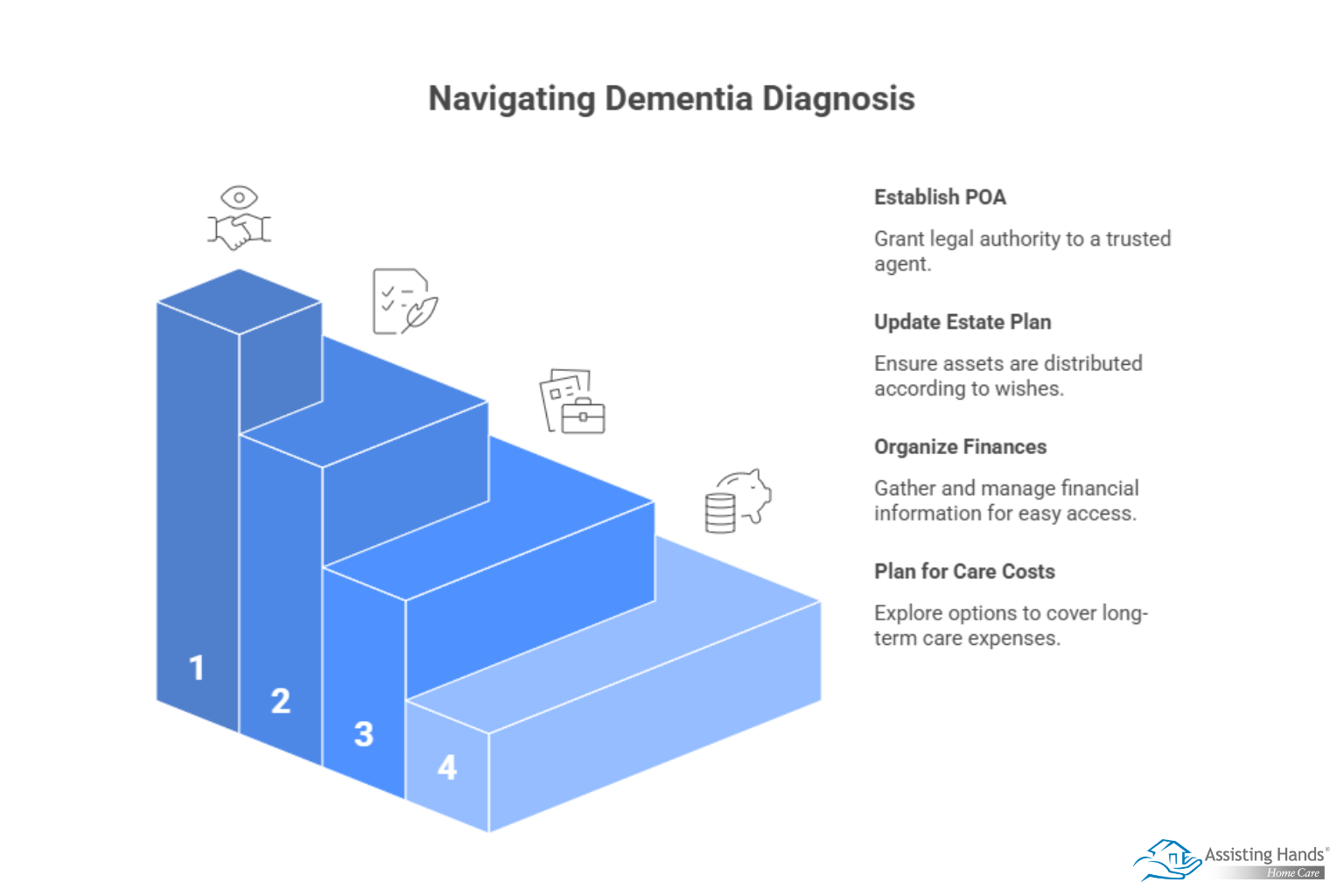
One of the most critical first steps is to establish power of attorney (POA). This legal document allows the person with dementia (the principal) to appoint a trusted individual (the agent) to make decisions on the principal’s behalf. It’s vital to create these documents while your loved one still has the legal capacity to make his or her own decisions. There are two main types:
- Financial power of attorney – This grants the agent the authority to manage financial matters, such as paying bills, managing investments, and handling real estate transactions.
- Medical power of attorney – Also known as a healthcare proxy, this empowers the agent to make healthcare decisions for the principal if he or she becomes unable to do so.
If your loved one gives you medical power of attorney, you’ll have the authority to hire an in-home caregiver for him or her. The type of elder care Savannah seniors need can vary. Some need assistance a few hours a day, while others require more extensive around-the-clock assistance. At Assisting Hands Home Care, we tailor our care plans based on each senior’s individual care needs, and the plans can be adjusted at any time. We are a trusted provider of respite and 24-hour care, and we also offer specialized Alzheimer’s, dementia, Parkinson’s, and stroke care for seniors.
Create or Update an Estate Plan
An estate plan outlines how someone’s assets will be distributed after his or her passing. If your loved one already has one, a dementia diagnosis is a clear signal to review and update it. If not, now is the time to create it. Key components of an estate plan include:
- Last will and testament – This document specifies how your loved one’s property and assets should be divided. It also allows your loved one to name a guardian for any minor children.
- Living trust – A trust can help people manage assets both during their lifetimes and after. It can sometimes prevent the probate process, making asset transfer simpler for beneficiaries.
Consulting with an estate planning attorney is essential to ensure these documents are legally sound and accurately reflect your loved one’s wishes.
If your loved one’s wishes include living at home as long as possible, it’s a good idea to plan ahead for the possibility he or she may need help with the activities of daily living. Certain age-related conditions can make it more challenging for older adults to age in place safely and comfortably, but experts in live-in care for Savannah seniors are available around the clock to help aging adults manage their health. Whether your loved one is living with dementia or recovering from a stroke, you can trust the professional caregivers from Assisting Hands Home Care to enhance his or her quality of life.
Organize Financial Accounts and Information
Gathering and organizing all financial information in one place will make management much easier for the designated agent in the future. Create a comprehensive list or binder that includes:
- Bank and investment account details (account numbers, locations)
- Sources of income (Social Security, pensions, retirement funds)
- Recurring bills and monthly expenses (utilities, mortgage, insurance)
- Contact information for financial advisors, accountants, and insurance agents
- Locations of important documents like deeds, vehicle titles, and tax records
Consider adding the agent as a joint owner or authorized signer on key bank accounts to ensure he or she can access funds to pay bills without interruption.
Plan for Long-Term Care Costs
Dementia is a progressive condition, and the need for long-term care is a strong possibility. The costs associated with assisted living, memory care facilities, or in-home caregivers can be substantial. It’s important to explore how you’ll cover these potential expenses. Options to investigate include:
- Long-term care insurance – Review existing policies or look into purchasing one, though a new diagnosis may affect eligibility.
- Medicaid – Research the eligibility requirements for Medicaid in your state, as it can cover some long-term care costs for those with limited income and assets.
- Veterans benefits – If applicable, explore benefits available through the Department of Veterans Affairs.
Even when families have the best intentions, caring for a senior loved one with dementia can be challenging. Fortunately, Assisting Hands Home Care is here to help. We are a leading provider of dementia care Savannah families can trust. You can take advantage of our flexible and customizable care plans, and our caregivers always stay up to date on the latest developments in senior care. Trust Assisting Hands Home Care to provide high-quality compassionate professional care for your loved one. Call one of our friendly Care Specialists today.