
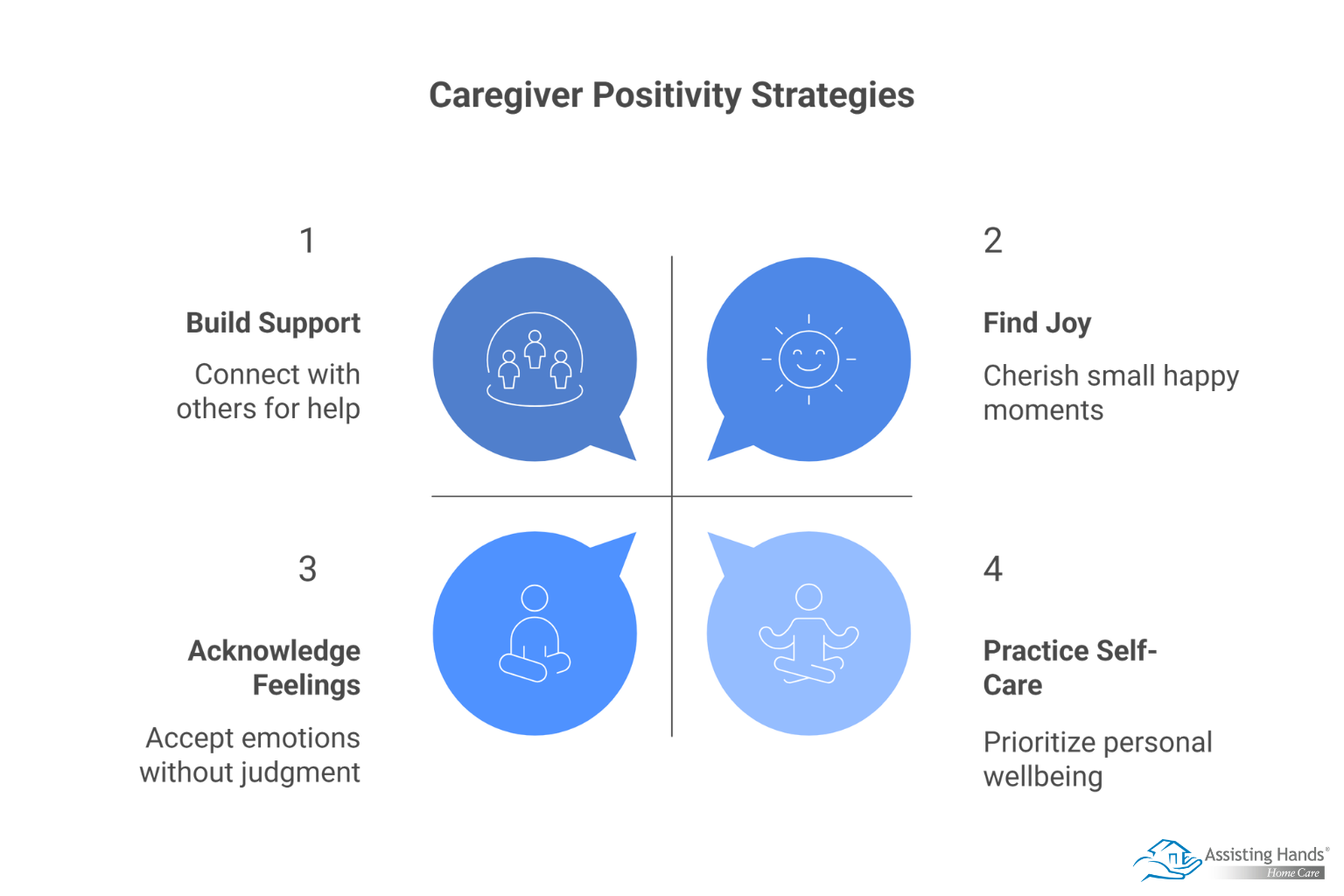
You can stay positive during challenging caregiving moments by acknowledging your emotions, building a support network, focusing on small joys, practicing self-care, and reframing your perspective. These strategies reduce stress, strengthen resilience, and sustain your ability to provide compassionate care.
Caregiving is one of the most rewarding roles you can take on, but it also comes with distinct emotional and physical hurdles that can test even the most resilient individuals. When you’re responsible for someone else’s wellbeing, maintaining your own positive mindset isn’t just a luxury—it’s an essential part of providing sustainable, high-quality care.
Why Is It Important to Acknowledge and Validate Your Feelings as a Caregiver?
Recognizing and accepting your emotions prevents burnout and supports a healthier mindset. The first step in maintaining positivity is accepting that it’s normal not to feel positive all the time. Caregiving often involves a roller coaster of emotions, from profound love and gratitude to frustration, guilt, and exhaustion. Suppressing these negative feelings can lead to burnout. Instead, practice acknowledging them without judgment.
Validating your emotions allows you to process them healthily. You might say to yourself “I’m feeling overwhelmed right now, and that’s a reasonable response to a difficult situation.” This simple act of self-compassion can lower stress levels and make room for more positive emotions to return. Remember, feeling frustrated about the situation doesn’t mean you don’t care about your senior loved one.
How Can Building a Support Network Strengthen Your Emotional Resilience?
A reliable support system reduces isolation and helps you navigate caregiving challenges more effectively. Isolation is a common adversary for caregivers, making challenges feel insurmountable. Building and maintaining a support network is crucial for keeping your spirits high. This network doesn’t always have to be formal. It can be a mix of friends, family, and professionals.
Consider these ways to broaden your circle:
- Join a support group – Connecting with others who are navigating similar journeys can be incredibly validating. It provides a safe space to vent and share practical advice.
- Delegate tasks – Allow friends or family members to help with specific errands, such as grocery shopping or pharmacy runs, to free up mental space.
- Seek professional help – Therapists or counselors can provide coping strategies tailored to your specific situation.
Seniors can face a variety of age-related challenges. Though some families choose to take on the caregiving duties, there may come a time when they need trusted home care service for their loved ones living in Savannah or surrounding areas. Families sometimes need respite from their duties so they can focus on their other responsibilities, and some seniors need around-the-clock assistance that their families are not able to provide. Assisting Hands Home Care is here to help.
What Are “Micro-Moments” of Joy and How Do They Boost Positivity?
Small, meaningful moments of happiness can counterbalance the stress of caregiving responsibilities. When you’re in the thick of caregiving duties, waiting for a “good day” can sometimes feel like a waiting game you can’t win. Instead, shift your focus to finding “micro-moments” of joy. These are small, fleeting pockets of happiness that exist even on the hardest days.
These moments might look like:
- Sharing a laugh over a funny TV show with your loved one
- Enjoying a quiet cup of coffee before the day begins
- Noticing a beautiful sunset or blooming flowers outside the window
- Receiving a genuine smile or a “thank you” from your loved one
By actively training your brain to notice these small positives, you build resilience against the overarching stress of your responsibilities.
Why Should Caregivers Prioritize Consistent Self-Care Rituals?
Regular self-care supports your physical and emotional health, enabling you to care for others effectively. You cannot pour from an empty cup. While this phrase is often repeated, its truth is undeniable in caregiving contexts. Prioritizing yourself isn’t selfish. It’s a strategic move to ensure you can keep caring for your loved one effectively. This doesn’t necessarily mean spa days or long vacations, which might not be feasible.
Focus on achievable self-care rituals:
- Physical activity – Even a 10-minute walk can boost endorphins and clear your head.
- Sleep hygiene – Try to maintain a regular sleep schedule as much as the caregiving situation allows.
- Hobbies – Carve out small blocks of time for activities that are just for you, whether it’s reading, knitting, or gardening.
Family caregivers need to care for their own wellbeing. If you’re caring for an aging loved one and are feeling overwhelmed, consider hiring a professional caregiver to provide respite care Savannah families can trust. To prevent burnout, you can turn to Assisting Hands Home Care. One of our professional caregivers can assist your loved one at home while you take a nap, go to work, run errands, or go on vacation.
How Can Reframing Your Perspective Enhance Your Caregiving Experience?
Shifting your mindset toward purpose and meaning can make daily caregiving tasks feel more rewarding. How you view your role can significantly impact your mood. It’s easy to get bogged down in the daily grind of medical appointments, medication schedules, and hygiene tasks. However, reframing your perspective can help you find meaning in the mundane.
Try to view challenges as opportunities to demonstrate love and resilience. Remind yourself of the value of your presence in your loved one’s life. Focusing on the purpose behind your actions—providing comfort, dignity, and companionship—can act as a powerful anchor during stormy moments.
Frequently Asked Questions
What is respite home care and how does it help family caregivers?
Respite home care provides temporary relief for family caregivers by offering professional support for their loved ones, allowing caregivers to rest and recharge.
How long can respite care services be provided?
Respite care can range from a few hours to several days, depending on the family’s needs and the care provider’s offerings.
What types of support do respite caregivers provide?
Respite caregivers assist with daily tasks, personal care, companionship, and ensuring the safety and wellbeing of the individual receiving care.
How does respite care benefit family caregivers?
It reduces stress, prevents burnout, and gives caregivers time to focus on their own health, responsibilities, or personal needs.
Can respite care be customized to fit specific family needs?
Yes, respite care plans are tailored to the individual’s requirements and the family’s schedule, ensuring seamless and effective support.
Whether you need respite from your caregiving duties or your aging loved one needs live-in care in Savannah or a nearby community, Assisting Hands Home Care can meet your family’s care needs. Our dedicated caregivers are available around the clock to provide transportation to doctor’s appointments, ensure seniors take their prescribed medications, and help with a variety of tasks in and outside the home. If you need compassionate professional care for your loved one, call one of our friendly Care Specialists today.