As our senior loved ones age, they may face mobility challenges that make everyday tasks more difficult. Fortunately, there are many ways you can provide support to help your loved one maintain his or her independence and quality of life.
Create a Safe Home Environment
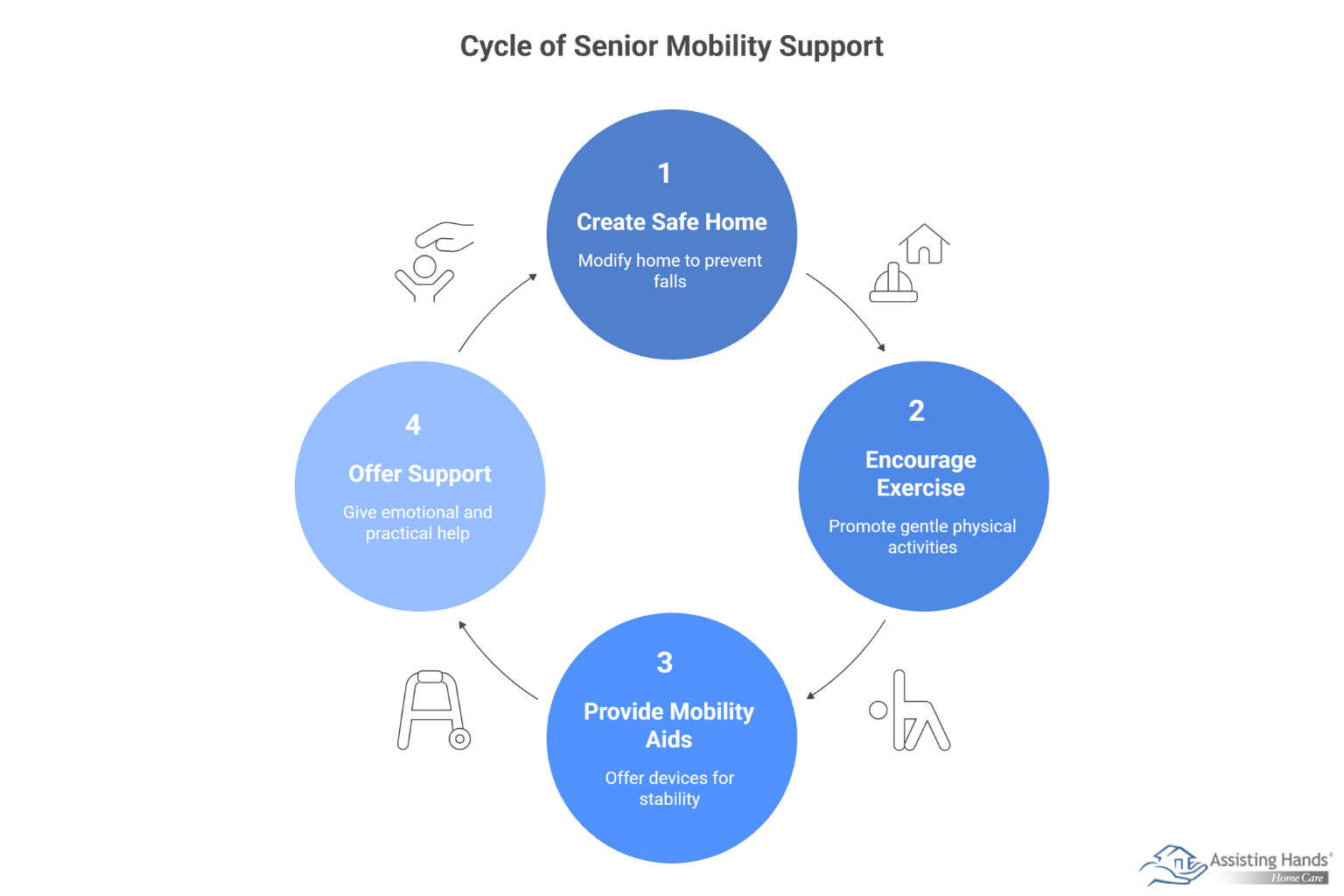
One of the most effective ways to support a senior with mobility issues is to ensure the living space is safe and easy to navigate. Simple modifications can significantly reduce the risk of falls and make daily activities more manageable.
- Remove hazards – Clear clutter from floors, hallways, and staircases. Secure loose rugs with nonslip backing or remove them entirely.
- Improve lighting – Ensure all areas of the home, especially hallways and bathrooms, are well lit. Consider using nightlights for better visibility after dark.
- Install safety features – Add grab bars in the bathroom near the toilet and in the shower. Install handrails on both sides of any stairways.
- Rearrange furniture – Organize furniture to create clear, wide pathways for walking. Keep frequently used items within easy reach to minimize stretching and bending.
There are a variety of age-related health conditions that can make it more challenging for seniors to live independently. However, many of the challenges they face can be easier to manage if their families opt for professional Home Care Savannah. Families can rely on expertly trained caregivers to keep their loved ones safe and comfortable while aging in place.
Encourage Regular Gentle Exercise
Staying active is crucial for maintaining muscle strength, flexibility, and balance, which can prevent falls and increase overall mobility. It’s important to encourage exercises that are appropriate for your loved one’s physical condition.
- Consult a professional – Before starting any new exercise routine, it’s best to consult with a doctor or physical therapist. These professionals can recommend safe and effective activities.
- Focus on low-impact activities – Gentle exercises like walking, swimming, tai chi, or seated yoga are excellent options. These activities put minimal stress on the joints while still providing health benefits.
- Start slowly – Encourage your loved one to start with short, manageable sessions and gradually increase the duration and intensity as his or her strength increases.
Provide Mobility Aids and Assistive Devices
The right mobility aids can provide stability and support, empowering seniors to move around more confidently and independently. There are a wide range of devices available to suit different needs.
- Walking aids – Canes, walkers, and rollators can offer support and reduce the risk of falling. A physical therapist can help you determine the best type of aid and ensure it’s fitted correctly.
- Bathroom aids – Besides grab bars, consider a shower chair or a raised toilet seat to make bathing and using the toilet safer and more comfortable.
- Reaching tools – Grabber tools can help your loved one retrieve items that are out of easy reach, preventing the need to stretch or climb on stools.
A trained caregiver with experience in caring for seniors with mobility limitations can be a fantastic resource for family members. Living independently is important for seniors who want to maintain a high quality of life. For some, this simply means receiving help with tasks that have become more challenging to manage over time. Even when families have the best intentions, they may not have the time to provide the care their elderly loved ones need and deserve. If your loved one needs help for a few hours a day or a few days a week, reach out to Assisting Hands Home Care, a trusted provider of respite care Savannah seniors can depend on.
Offer Emotional and Practical Support
Living with mobility challenges can be frustrating and isolating. Providing consistent emotional and practical support can make a significant difference in your loved one’s wellbeing.
- Be patient and understanding – Acknowledge your loved one’s frustrations and offer a listening ear. Patience can help your loved one feel more comfortable and less rushed.
- Assist with daily tasks – Offer to help with chores that have become difficult, such as grocery shopping, cooking, or house cleaning.
- Arrange transportation – Help your loved one get to appointments or social outings. Driving your loved one yourself or arranging for a senior-friendly transport service can help him or her stay connected to the community.
If your senior loved one needs hourly or live-in care Savannah families can trust, Assisting Hands Home Care can help. Our caregivers can assist with exercise and mobility, prepare nutritious meals, provide timely medication reminders, and help with a wide array of other important daily tasks. To learn about our high-quality in-home care plans, call us today.