
Many caregivers find hygiene routines to be one of the most emotionally challenging aspects of dementia care. It’s not the tasks themselves that are difficult, but it’s a fact that sometimes seniors with dementia may suddenly become afraid of water, resist assistance, or feel overwhelmed by what was once a simple daily activity. With the right approach from professionals providing Home Care Savannah, however, these routines can transform from a stressful chore into a meaningful moment of connection and comfort.
Understanding Why Hygiene Becomes Difficult for Those with Dementia
People with dementia often lose the ability to interpret sensory input the way they once did. What feels like a warm shower to you may feel startlingly loud or cold to your senior loved one. The steps involved in bathing, undressing, getting in, washing, rinsing, and drying become fragmented. And when the brain has difficulty piecing things together, fear or resistance is a natural response.
Care experts often compare this experience to waking up disoriented in a strange place while someone urges you into the shower. You’d hesitate, too. Recognizing this can shift your mindset from “Why won’t my loved one cooperate?” to “How can I reduce the fear in this moment?”
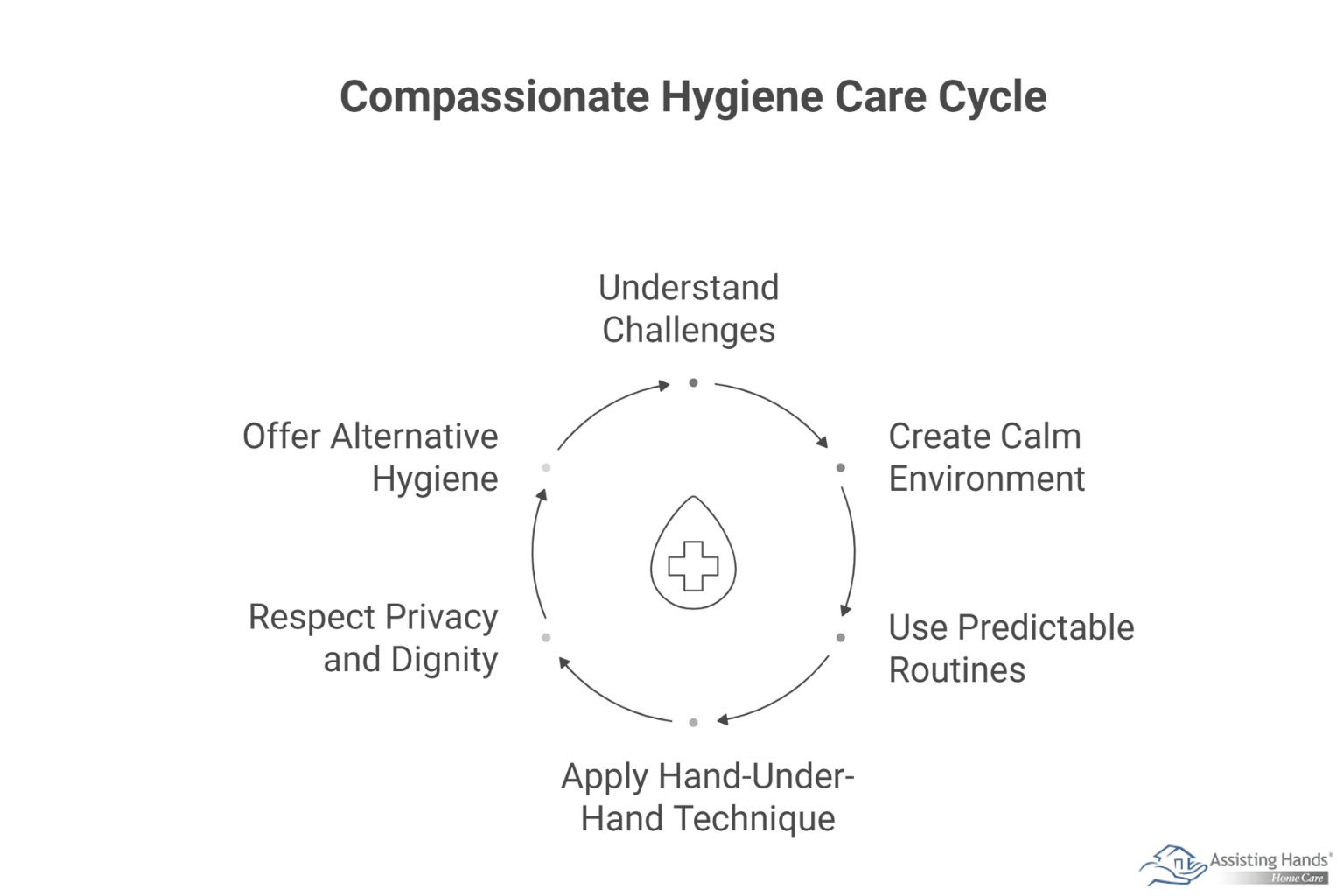
Creating a Calm, Safe Environment Before You Begin
Small environmental cues matter. A chilly bathroom can instantly trigger agitation, so warming the room beforehand may help. Many caregivers providing the most requested home care services also find that using dimmer lighting or playing familiar music eases tension. A favorite song or soft instrumental track can serve as a gentle anchor, grounding your loved one while you prepare the space. Keeping supplies like soap, towels, and shampoo visible reduces unnecessary movement. People with dementia tend to feel safer when they can see what’s happening rather than wait in uncertainty.
Using Predictable Routines, Not Rigid Schedules
Although routine supports comfort, a rigid timetable can create pressure. Some individuals simply bathe better in the afternoon when they’re more alert, while mornings may feel rushed or confusing.
Instead of forcing the day to bend around bathing, observe patterns:
- When is your loved one calmest?
- When does your loved one respond best to touch?
- Does a warm drink beforehand relax your loved one?
Responding to these cues builds trust, and trust is often the biggest predictor of a successful hygiene routine.
The Hand-Under-Hand Technique: Gentle Guidance that Works
Many dementia care specialists, including occupational therapist Teepa Snow, teach a guiding method called hand-under-hand. Rather than pulling or directing from behind, you gently place your hand under your loved one’s hand and move together. It’s a subtle change, but it transforms the dynamic from “You’re doing this to me” to “We’re doing this together.”
This technique is especially helpful when:
- Washing delicate areas
- Washing hair
- Shaving or performing nail care tasks
- Transitioning in and out of the shower
People with dementia often mirror their caregiver’s pace, making cooperation smoother and reducing the urge to resist.
Why Privacy and Dignity Matter More than You Realize
One of the most overlooked aspects of hygiene care is modesty. Even individuals who never cared much about privacy in the past may become intensely protective of their bodies as dementia progresses. Covering your loved one with a towel while guiding him or her into the bath or letting him or her hold a washcloth for certain areas can preserve dignity.
Think of it as meeting your loved one where he or she is emotionally, not just physically.
When Bathing Becomes Distressful: Alternative Hygiene Approaches
There will be days when a full bath simply isn’t realistic. Instead of pushing through—which may lead to aggression or emotional shutdown many caregivers turn to “partial hygiene.”
This may include:
- Cleansing wipes for underarms and groin
- Warm, gentle face washing
- Using a no-rinse shampoo cap
- Moisturizing the skin to prevent dryness
Healthcare professionals confirm thorough daily bathing isn’t medically necessary for most older adults. Instead, maintaining cleanliness and preventing infection are the primary goals.
Table: Common Hygiene Challenges & Helpful Responses
| Hygiene Challenge | Why It Happens | Compassionate Response |
| Fear of water or the shower | Sensory overload, noise, temperature sensitivity | Use a handheld shower, warm the room, start with hands/feet first |
| Refusal to undress | Modesty, vulnerability, confusion | Offer towels, undress in stages, explain each step calmly |
| Agitation during bathing | Feeling rushed or startled | Try a slow pace, warm temperature, calming music, hand-under-hand technique |
| Resistance to hair washing | Water near the face feels threatening | Use a no-rinse shampoo cap, tilt your loved one’s head gently forward |
A Real Case: How Small Adjustments Make a Big Difference
In Savannah, Georgia, a local community program offers a powerful example of compassionate dementia care. The program provides a day respite service for people living with mild to moderate dementia, as well as support for their caregivers.
What the Program Does
The program operates twice a week for four hours each day.
Participants engage in activities such as games, music, art, gentle exercise, shared meals, and meaningful service projects. The environment encourages everyone to contribute—there’s no strict distinction between participants and volunteers, allowing people with dementia to feel included, valued, and purposeful.
Caregivers benefit from regular breaks during the sessions, which reduces stress and prevents burnout. Many caregivers report feeling refreshed, supported, and better able to manage the challenges of daily care at home.
The Impact
Even small adjustments like involving participants in decision-making, offering familiar music, or encouraging teamwork in activities can make a significant difference in mood, engagement, and overall wellbeing. Both participants and caregivers experience tangible improvements in emotional health, demonstrating that thoughtful, personalized approaches can transform the caregiving experience.
A Final Takeaway
Compassionate hygiene care is less about perfect technique and more about understanding the emotional world of someone living with dementia. When caregivers approach these moments with patience, warmth, and flexibility, the experience becomes gentler for both sides. Even small victories, such as a quiet bath, a moment of laughter, or a peaceful hair wash, can feel like genuine progress.
Frequently Asked Questions
How do you help dementia patients with hygiene?
+
Helping dementia patients with hygiene requires patience, empathy, and routine. Caregivers should approach tasks gently, explain each step clearly, and offer choices to give a sense of control. Using familiar routines, warm water, and comfortable clothing can make bathing or grooming less stressful, while providing assistance only as needed promotes independence.
What tips can be used to compassionately communicate with a patient with dementia?+
Compassionate communication with dementia patients involves speaking slowly and clearly, maintaining eye contact, using simple sentences, and avoiding corrections or arguments. Listening actively, validating feelings, and using gentle touch or reassurance can reduce anxiety and create a sense of safety and trust.
What are the 4 Rs of dementia care?+
The 4 Rs of dementia care are Remind, Reassure, Redirect, and Reframe. Caregivers remind dementia patients of routines, reassure them during distressing moments, redirect attention from confusion or agitation, and reframe negative situations to reduce frustration and improve cooperation.
What are strategies to create an appropriate environment for a person with dementia?+
Creating a supportive environment includes ensuring safety by removing hazards, simplifying the layout to reduce confusion, maintaining good lighting to prevent falls, using familiar objects to provide comfort, and minimizing noise or distractions to reduce stress and agitation.
What are common hygiene problems with dementia patients?+
Dementia can cause hygiene challenges such as forgetting to bathe, resistive behavior, fear of water, difficulty handling personal care items, and reduced awareness of cleanliness. Emotional responses like embarrassment, anxiety, or agitation may also complicate daily hygiene routines, making compassionate support essential.