
If you run out of money for dementia care, you’ll need to explore alternative funding resources, rely on family caregivers, or transition to a more affordable community-supported facility. Navigating the financial challenges of long-term cognitive care can feel overwhelming for families. However, understanding your options early can help you secure a safe and supportive environment for your senior loved one.
Can Family Members Provide the Necessary Care?
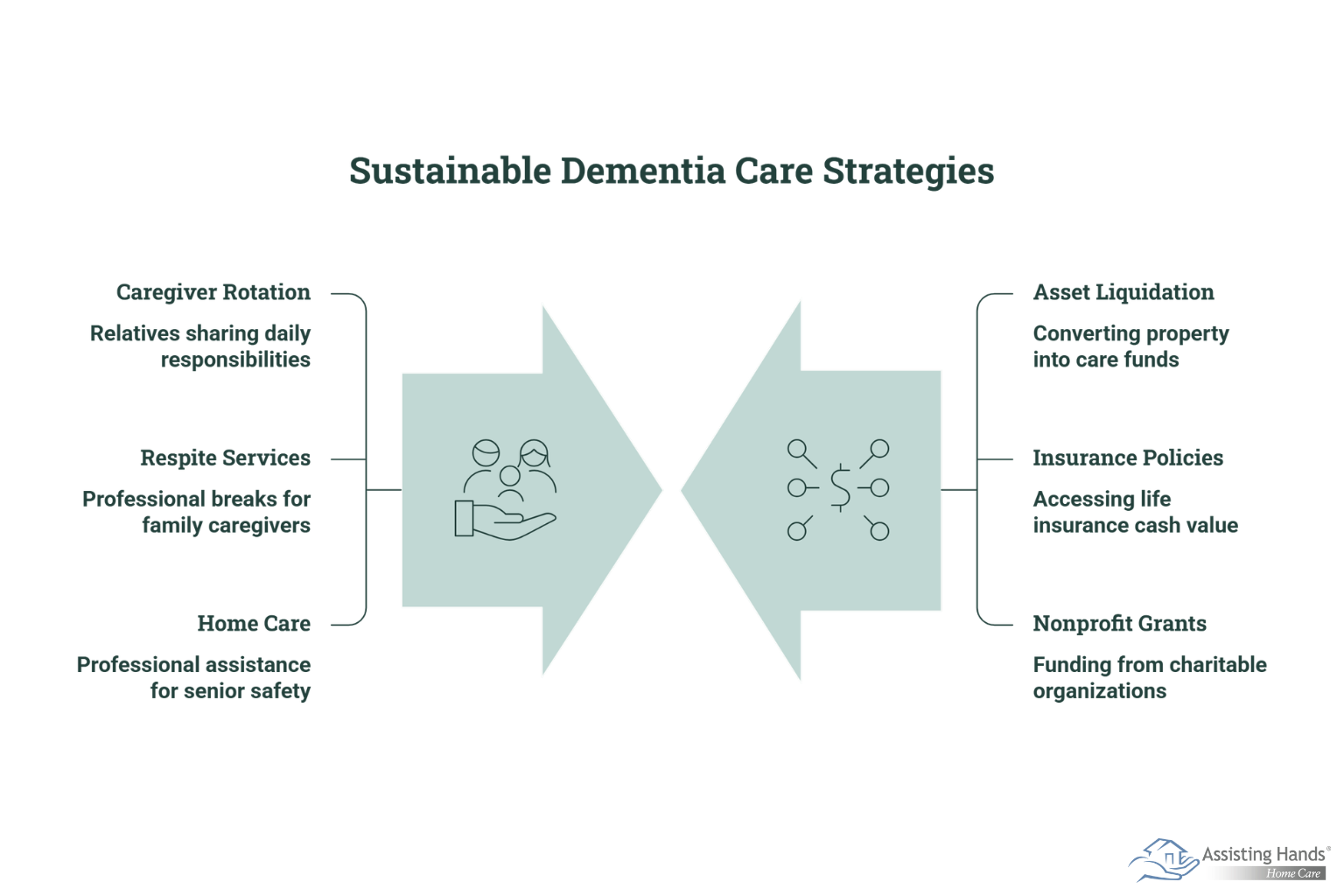
Many families choose to take on caregiving responsibilities themselves to eliminate professional care costs. This often involves creating a rotating schedule among relatives to ensure the senior is safe and supported around the clock. While cost-effective, this approach requires significant time and emotional resilience from everyone involved.
Family caregivers sometimes need a break from their caregiving responsibilities. When Savannah families need respite or overnight home care, they can rely on the professional caregivers from Assisting Hands Home Care to help their senior loved ones remain safe at home.
Are There Nonprofit Organizations that Offer Financial Support?
Yes, several charitable groups and foundations provide grants or respite care funding for dementia patients facing financial hardship. Organizations dedicated to cognitive health often have local chapters that can connect you with vital community resources. Helpful avenues to explore include:
- Local religious institutions and charities
- Community aging councils
- Dementia-specific nonprofit foundations
- Volunteer-driven meal delivery services
Can We Use Life Insurance or Home Equity to Fund Care?
If your loved one owns a home or holds a life insurance policy, these assets can often be converted into cash to pay for continuing care. Liquidating assets is a common strategy when liquid savings are depleted. Potential options include:
- Selling the primary residence or downsizing
- Securing a reverse mortgage to access home equity
- Cashing out a life insurance policy early
- Arranging a life settlement through a third-party buyer
The type of in-home care Savannah seniors need can vary. Some need assistance a few hours a day, while others require more extensive around-the-clock assistance. At Assisting Hands Home Care, we tailor our care plans based on each senior’s individual care needs, and the plans can be adjusted at any time. We are a trusted provider of respite and 24-hour care, and we also offer specialized Alzheimer’s, dementia, Parkinson’s, and stroke care for seniors.
Frequently Asked Questions
Can adult children be held legally responsible for care debts?
+
In some states with filial responsibility laws, adult children can theoretically be held liable for their parents’ unpaid care bills. However, these laws are rarely enforced unless the adult child actively hid or misappropriated the parent’s assets.
Are there local support groups for financial planning?+
Many local community centers and dementia charities host free support groups that share tips on managing care costs. These groups provide an excellent space for families to exchange practical financial advice and local resource recommendations.
How do I find affordable adult day care centers?+
You can search online directories or contact your local community center to find subsidized adult day programs. These centers offer supervised care during the day at a fraction of the cost of full-time residential facilities.
Even when families have the best intentions, caring for a senior loved one with dementia can be challenging. Fortunately, Assisting Hands Home Care is here to help. We are a leading provider of dementia care Savannah families can trust. You can take advantage of our flexible and customizable care plans, and our caregivers always stay up to date on the latest developments in senior care. Call today to speak with a friendly and experienced Care Specialist to formulate a home care plan for your loved one.