
Caregivers can protect their mental health by building a support network that includes family, friends, peer groups, and professional care services. Having a support network reduces stress, prevents burnout, and gives caregivers the emotional and practical help they need to stay healthy. Many families in multiple areas in Savannah who use Home Care Savannah already rely on these support systems to stay balanced while caring for their senior loved ones.
Caregiving is meaningful, but the emotional strain, physical fatigue, and constant responsibility can gradually drain anyone. No one is meant to carry this alone. A strong support system becomes your emotional and practical safety net, helping you stay mentally strong while supporting someone you love.
Why Support Networks Matter: The Mental Health Impact
Caregiving affects nearly every part of life: sleep, relationships, energy levels, and even financial stability. Research clearly highlights the emotional pressure caregivers face:
- 61% of caregivers report high emotional stress
- 40% experience signs of anxiety or depression
- 1 in 5 goes through burnout at least once a year
- Caregivers with support systems are 33% less likely to feel overwhelmed
A solid support network reduces emotional overload, decision fatigue, isolation, and physical exhaustion. At the same time, it enhances sleep, emotional stability, and long-term caregiving capacity.
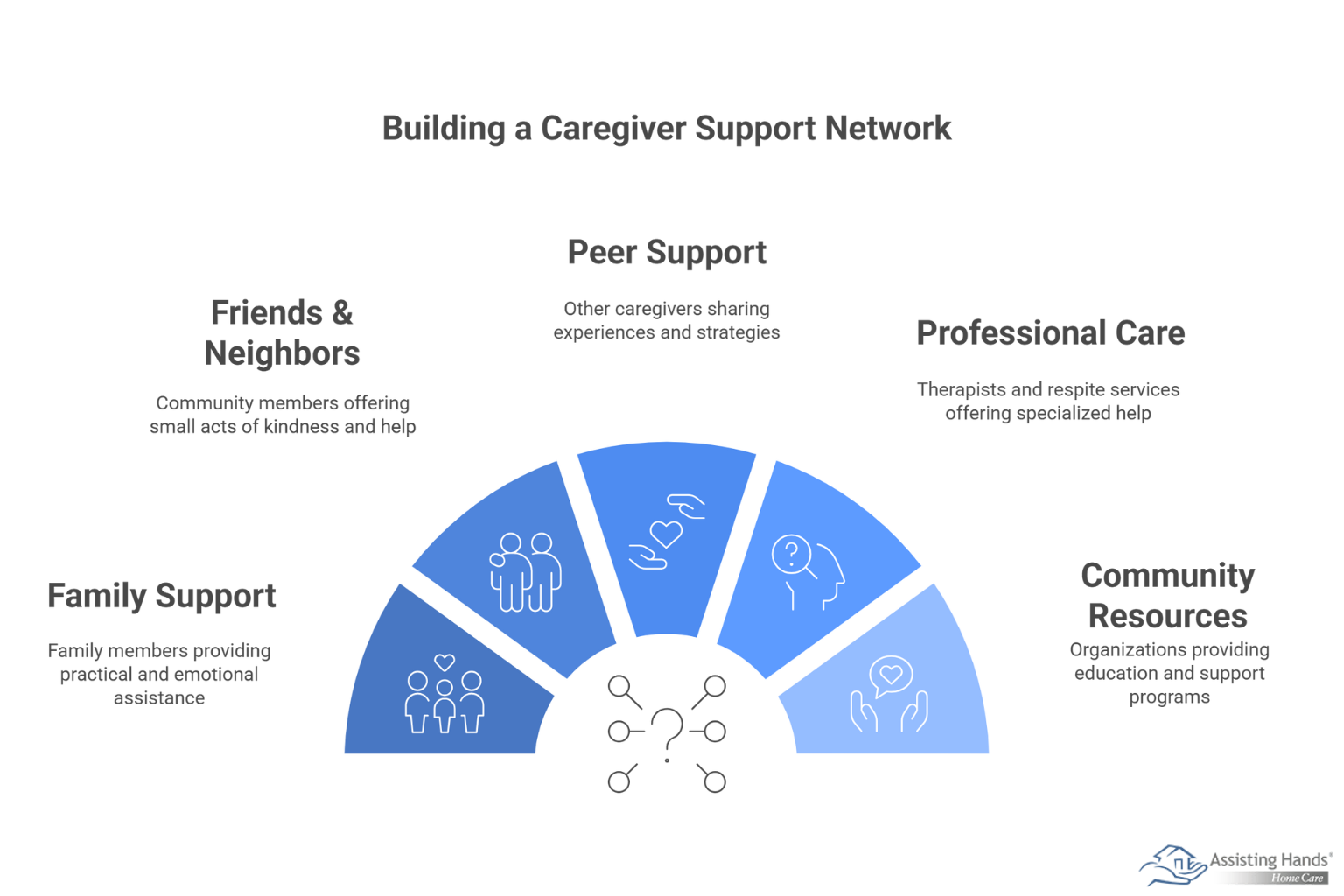
Who Should Be Part of Your Support Network?
A good support system shouldn’t depend on only one person—it works best when several people share the emotional and practical load in different ways.
Family Members: Your First Layer of Support
Family often plays a central role, but they must know exactly how to help. When you communicate clearly, coordinating help becomes easier and stress decreases. Family members can assist with errands, weekend rotations, spending time with your loved one, handling bills, or stepping in during emergencies. Many families use shared calendars or group chats to stay organized and make sure no one person handles everything alone.
Friends & Neighbors: Small Help, Big Relief
Even simple gestures from friends or neighbors can make a noticeable difference. A quick check-in visit, dropping off a meal, helping with chores, or offering a short conversation can reduce mental pressure. These small acts give caregivers breathing space throughout the week.
Other Caregivers: Peer Support That Understands You
Only another caregiver truly understands the emotional weight you carry. Peer groups, whether they’re local meetups, hospital programs, or community sessions, provide a safe place to share challenges, learn coping strategies, and feel understood. Online communities are also available for those who cannot attend in person, offering 24/7 support and guidance.
How to Build Your Support Network Step by Step
Step 1: Identify Your Needs Clearly
Every caregiver has different needs, but most fall into four categories: emotional support, practical help, caregiving tasks, and personal time. Understanding what you need makes it easier to ask the right people for the right kind of help.
Step 2: Choose the Right People for the Right Roles
Below is a simple table to make your support planning easier:
| Need | Best Support Source | Examples of Help |
| Emotional Support | Friends, peer groups, counselors | Listening, encouragement, stress relief |
| Practical Support | Family, neighbors, volunteers | Meals, errands, transportation |
| Caregiving Support | Professional caregivers | Mobility help, routines, medication reminders |
| Breaks & Rest | Respite services, family rotation | Time off, weekend coverage |
| Crisis Support | Social workers, on-call professionals | Emergency planning, backup care |
A balanced network usually includes at least one person in each category.
Step 3: Communicate Honestly and Set Realistic Expectations
Many caregivers hesitate to ask for help, but most people genuinely want to support you. You simply need to guide them. Specific requests work better than general complaints, and shared calendars or apps make coordination smoother. Clear communication also prevents misunderstandings and helps you maintain strong relationships.
Using Technology to Stay Organized
Digital tools make it easier to manage schedules, caregiving tasks, medications, and communication. Group chats help with quick updates, shared notes organize routines, and reminder apps keep important tasks on track. These tools reduce confusion and give everyone clarity on what needs to be done.
Maintaining Your Support Network Over Time
Support systems require regular connection. Caregivers can keep their support networks strong by sharing updates, expressing gratitude, distributing responsibilities fairly, and staying connected even when things seem calm. A stable network grows stronger when every member feels valued and informed.
Adding Professional Support to Strengthen Your Network
Friends and family can help significantly, but some situations require professional guidance or hands-on support.
Therapists & Counselors
Mental health professionals can help caregivers manage stress, anxiety, guilt, and early signs of burnout. Even occasional sessions may offer relief and clarity.
Respite Care Services
Short-term relief helps caregivers rest, work, exercise, or simply breathe. This is why respite care is an essential part of many families’ support plans. Even a few hours a week of professional help can dramatically boost your emotional wellbeing.
24/7 Care Support
Some seniors need constant supervision, mobility assistance, or nighttime support. Families who use 24-hour care gain peace of mind knowing professionals are available around the clock to help their loved one. This ensures the senior’s safety while protecting the caregiver’s mental and physical health.
Community Organizations that Can Help
Several national and local organizations offer caregiver support through education, emotional assistance, financial guidance, and planning tools. Groups like AARP, Family Caregiver Alliance, NAMI, the Rosalynn Carter Institute, and regional aging offices regularly provide training sessions and support programs. These resources give caregivers confidence and structure as they navigate their daily challenges.
Your Support Network Is Your Strength
A well-built support system keeps caregivers emotionally balanced, physically healthy, and better prepared for the responsibilities ahead. Whether the help comes from friends, family, peer groups, or professional caregivers, each connection makes your journey easier and more sustainable.
Reach out, stay connected, and remember: strong care begins with a supported caregiver.
Frequently Asked Questions
How do we provide support to help people with mental health problems?
+
Supporting someone with mental health challenges involves listening without judgment, encouraging professional help, offering practical assistance with daily tasks, checking in regularly, and promoting healthy routines like proper sleep, nutrition, and stress management.
What is a mental health support network?+
A mental health support network is a system of family, friends, professionals, peer groups, and community resources that provides emotional, social, and practical support, reduces isolation, makes coping easier, and encourages recovery.
How do you build a strong support system for mental health and wellbeing?+
A strong support system starts with trusted individuals, includes mental health professionals, and can involve peer groups or community resources. Clear communication and regular review ensure it meets evolving needs and supports wellbeing.
How do you protect your own mental health when supporting others?+
Protecting your mental health means setting boundaries, practicing self-care, seeking support, recognizing burnout signs, and remembering you’re supporting, not fixing, someone else’s mental health.
What are the 7 Cs of mental health?+
The 7 Cs are Competence, Confidence, Connection, Character, Contribution, Coping, and Control, which together promote resilience, self-esteem, and overall mental wellbeing.