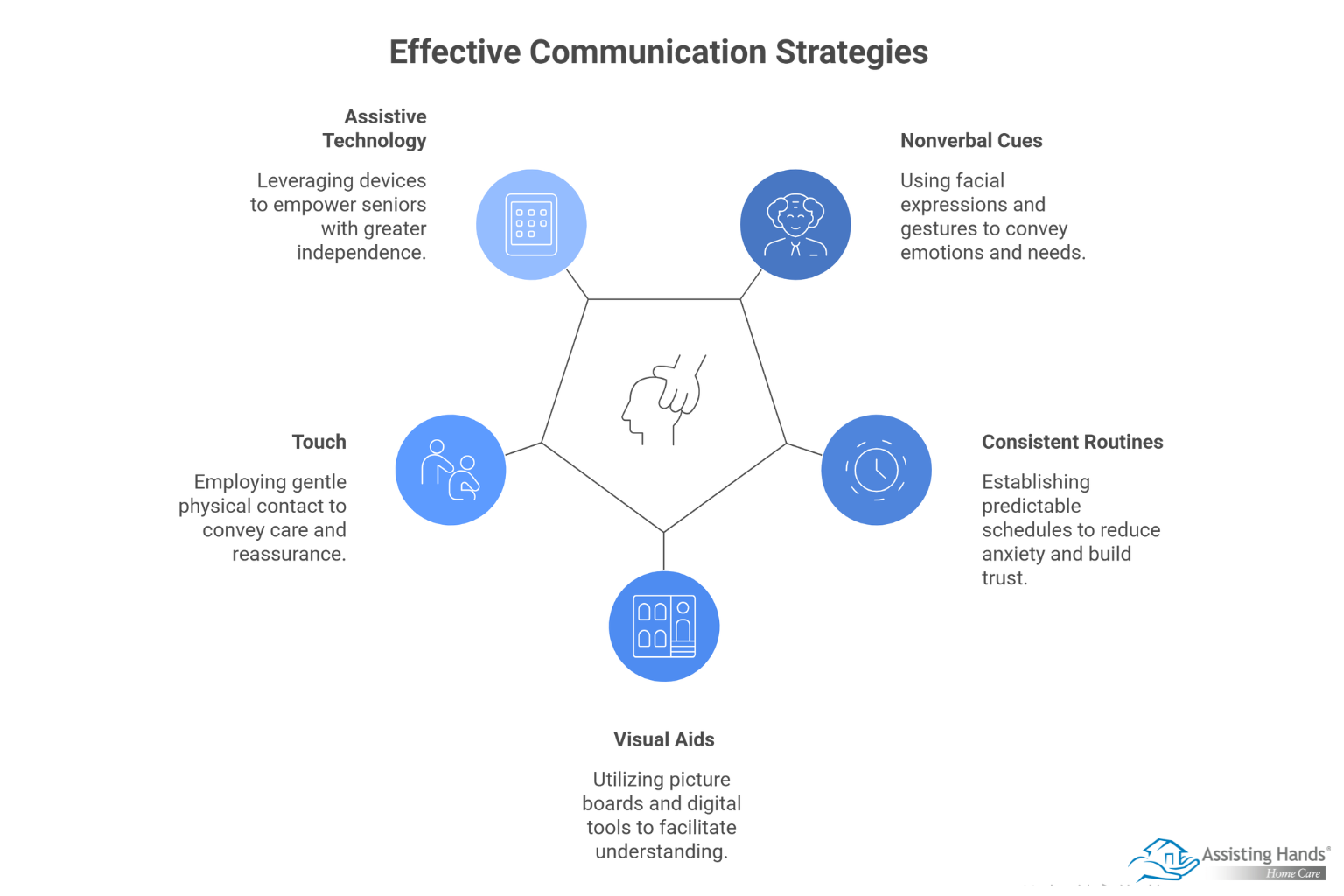
The most effective communication strategies for caregivers of nonverbal seniors include using nonverbal cues like facial expressions and gestures, establishing consistent routines, and utilizing visual aids or assistive technology. Understanding these techniques can help caregivers build stronger connections with senior loved ones who cannot speak, ensuring their needs are met while maintaining their dignity and emotional wellbeing.
Why Is Nonverbal Communication Important for Seniors?
Nonverbal communication becomes essential when seniors lose their ability to speak due to conditions like stroke, dementia, or Parkinson’s disease. Body language, facial expressions, and gestures often convey emotions and needs more clearly than words ever could. By paying attention to these signals, caregivers can:
- Identify discomfort or pain that might otherwise go unnoticed
- Build trust and emotional security through consistent, compassionate interaction
- Reduce frustration
- Maintain the senior’s sense of autonomy and personhood
Trained caregivers who have experience in communicating with nonverbal seniors can be a fantastic resource for family members. Certain age-related conditions can make it more challenging for seniors to age in place safely and comfortably, but 24-hour home care experts are available around the clock to help Savannah seniors manage their health. Whether your loved one is living with dementia or recovering from a stroke, you can trust the professional caregivers from Assisting Hands Home Care to enhance his or her quality of life.
How Can Caregivers Use Visual Aids Effectively?
Visual aids provide a bridge between intention and understanding. Picture boards, flash cards, and communication books allow seniors to point to images representing their needs, such as food, bathroom, or pain. These tools work particularly well for seniors with cognitive decline who may experience abstract thinking. To maximize effectiveness:
- Keep images simple and clear, using high-contrast colors.
- Organize visuals by category (daily activities, emotions, care needs).
- Place communication boards in easily accessible locations.
- Update aids regularly based on your loved one’s changing preferences.
Digital tablets with communication apps offer another layer of support, featuring customizable icons and text-to-speech capabilities that give seniors more control over their expression.
Professional caregivers with training and expertise in elder care can often identify the sources of seniors’ communication issues and respond effectively and compassionately. Families looking for top-rated Savannah senior care providers can reach out to Assisting Hands Home Care. From respite care to specialized Alzheimer’s, dementia, stroke, and Parkinson’s care, there are many ways we can make life easier for seniors and their loved ones.
What Role Does Touch Play in Caregiver Communication?
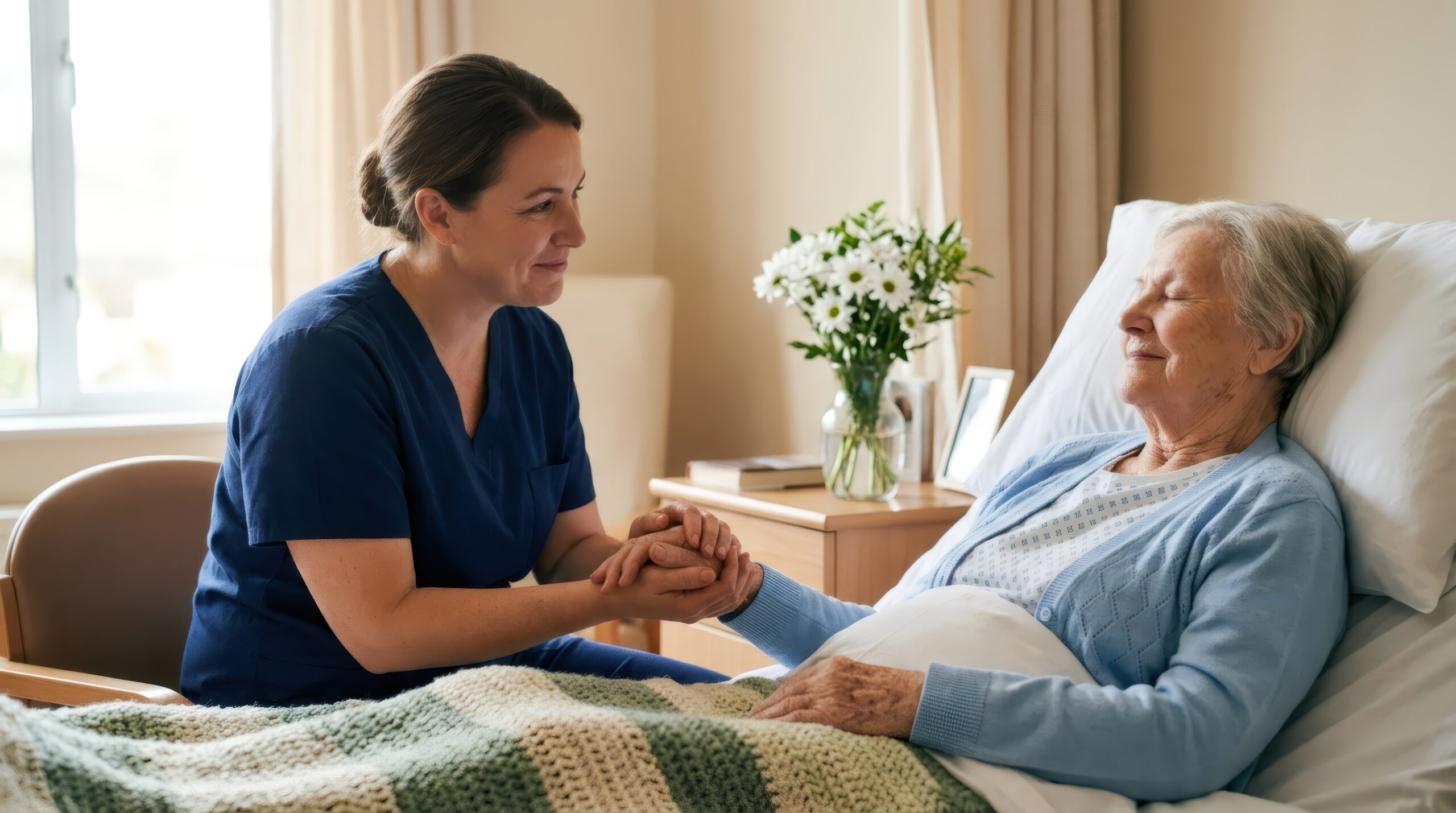
Touch serves as a powerful communication tool when used appropriately and respectfully. A gentle hand on the shoulder, holding hands during conversation, or a comforting pat can convey care and reassurance. Physical contact helps seniors feel less isolated and more connected to their environment. Consider these guidelines:
- Always ask for permission through gestures or observation of body language.
- Watch for signs of discomfort or withdrawal.
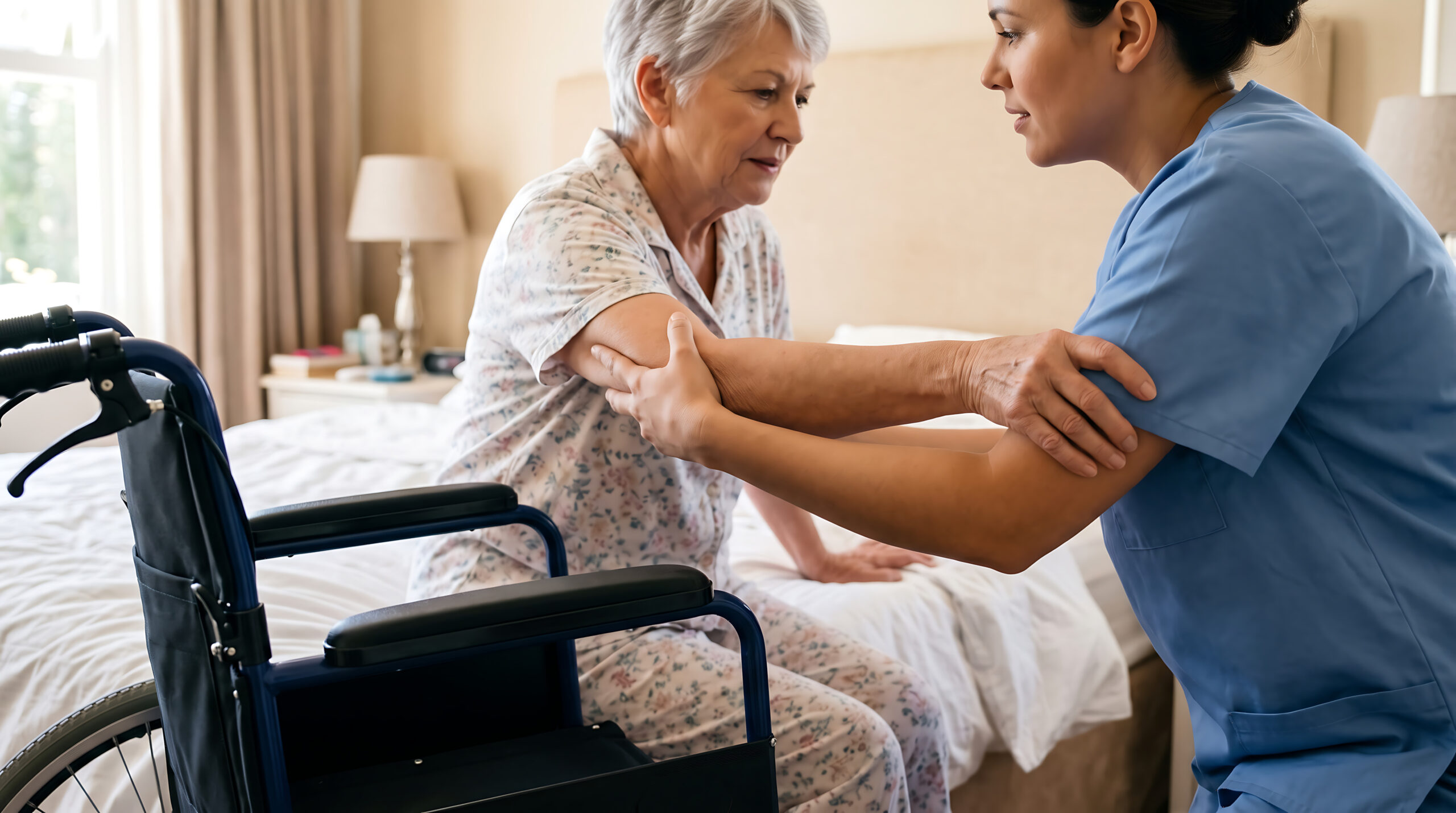
- Use touch to signal transitions, such as before helping with movement.
- Maintain eye contact while using touch to reinforce connection.
Remember that cultural backgrounds and personal histories influence how seniors perceive and respond to physical contact.
How Can Routine and Consistency Enhance Communication?
Establishing predictable routines helps nonverbal seniors anticipate what comes next, reducing anxiety and creating a shared language between caregiver and senior. When activities happen at the same time each day, seniors begin to recognize patterns and respond accordingly. This structure:
- Minimizes confusion and agitation
- Allows seniors to prepare mentally for transitions
- Creates opportunities for seniors to initiate communication through anticipatory behaviors
- Builds a foundation of trust as seniors learn to rely on consistent care
Pair routines with verbal narration of activities, even if your loved one cannot respond. Hearing your voice provides comfort and context for what’s happening.
What Are the Benefits of Assistive Technology for Nonverbal Seniors?
Assistive technology ranges from simple devices like electronic voice output communication aids to sophisticated eye-tracking systems. These tools empower seniors to express themselves with greater independence. Speech-generating devices can be programmed with commonly used phrases, while tablets offer apps designed specifically for seniors with limited mobility or cognitive function. Benefits include:
- Increased autonomy in expressing basic needs and preferences
- Enhanced quality of life through social interaction
- Reduced caregiver burden as seniors gain more control over communication
- Greater accuracy in understanding the senior’s specific requests
Work with speech therapists or occupational therapists to identify the most appropriate technology for your loved one’s abilities and needs.
If your loved one’s nonverbal status is due to dementia, compassionate help is just a phone call away. Even when families have the best intentions, caring for a senior loved one with dementia can be challenging. Fortunately, Assisting Hands Home Care is here to help. We are a leading provider of dementia home care Savannah families can trust. You can take advantage of our flexible and customizable care plans, and our caregivers always stay up to date on the latest developments in senior care. Trust your loved one’s care to the professionals at Assisting Hands Home Care. To create a customized home care plan for your loved one, call us today
Frequently Asked Questions
How do I know if a nonverbal senior is in pain?
+
Watch for grimacing, restlessness, guarding of body parts, rapid breathing, or changes in usual behavior patterns. Pain scales with facial expressions can also help seniors point to their level of discomfort.
Can a nonverbal senior still understand what I’m saying?
+
Many nonverbal seniors retain their ability to comprehend language even when they cannot speak. Always assume your loved one understands and speak to him or her with respect and clarity.
What should I do if my loved one becomes frustrated during communication attempts?
+
Take a break, offer reassurance through calm tone and gentle touch, and try a different communication method. Frustration often signals fatigue or overstimulation.
How can I tell the difference between discomfort and other emotions in nonverbal seniors?
+
Learn your loved one’s baseline behaviors and expressions. Changes from your loved one’s normal state—such as increased tension, furrowed brows, or avoidance of eye contact—can indicate specific emotions or needs.
Should I continue talking to a nonverbal senior who doesn’t respond?
+
Yes. Speaking to seniors maintains their connection to language and social interaction, provides comfort, and helps them feel valued and included.