
Caring for an aging loved one with dementia brings unique emotional challenges that can overwhelm even the most dedicated caregivers support. Guilt becomes a constant companion for many, creating additional stress during an already difficult journey.
Understand Why Caregiver Guilt Happens
Dementia caregiving guilt stems from multiple sources that compound over time. Many caregivers feel responsible for their loved ones’ condition, even though dementia results from medical factors beyond anyone’s control. The progressive nature of the disease means that no matter how much care you provide, your loved one’s condition will continue to worsen, which is why families often turn to professional Home Care Savannah services for added support and peace of mind.
Common guilt triggers may include:
- Feeling frustrated or angry with your loved one’s behavior
- Taking breaks or asking for help
- Making decisions about care level or living arrangements
- Having moments when you wish the situation were different
- Experiencing relief when your loved one passes away
These feelings are normal responses to an extraordinarily challenging situation, not character flaws or signs of inadequate love.
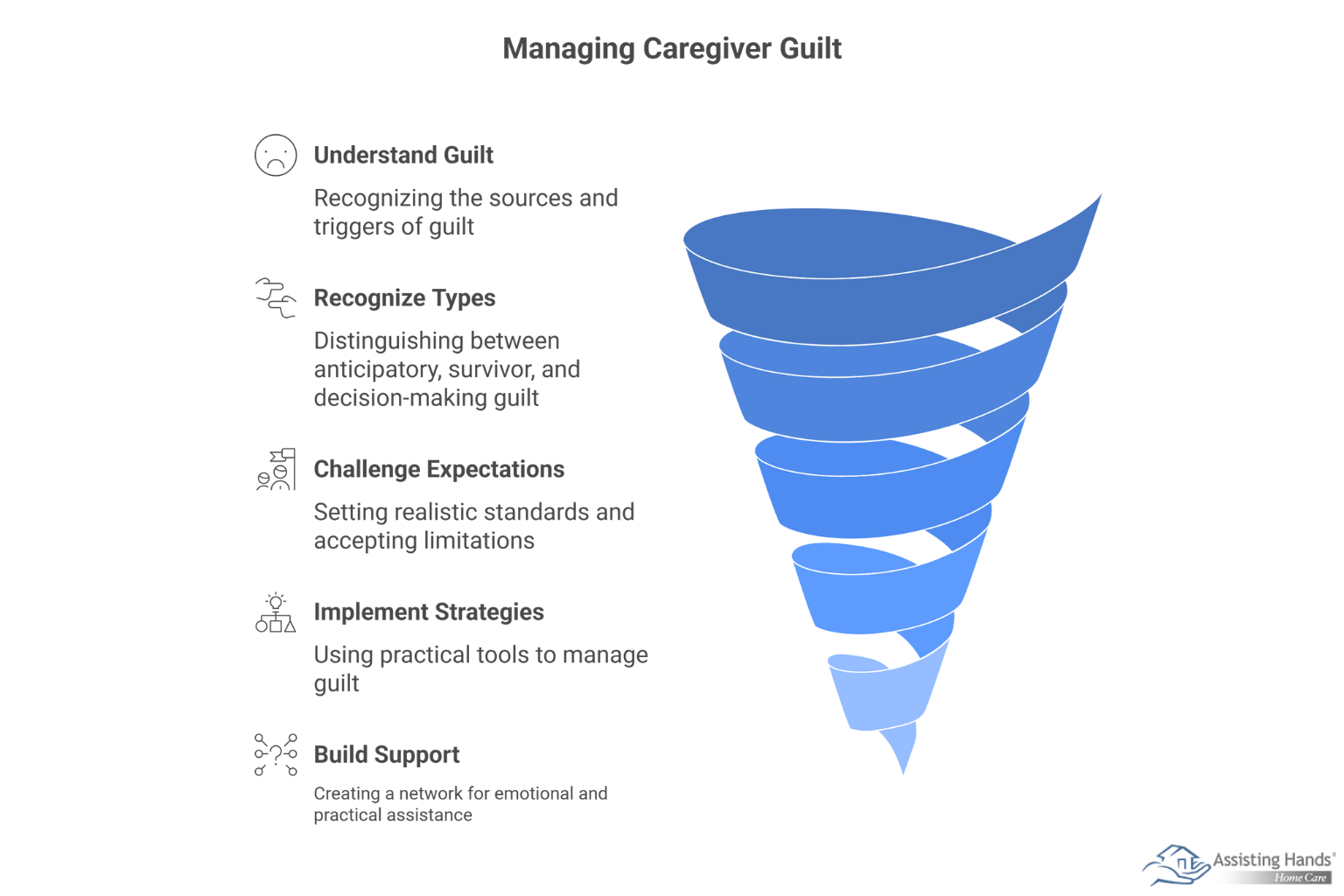
Recognize the Different Types of Guilt
Dementia caregivers experience several distinct types of guilt that require different coping strategies:
- Anticipatory guilt occurs when you consider future care decisions or worry about not doing enough. This forward-looking anxiety can paralyze decision-making and increase stress levels unnecessarily.
- Survivor guilt develops when you maintain your health, independence, or happiness while your loved one experiences cognitive decline. Many caregivers feel guilty for enjoying activities, maintaining friendships, or pursuing personal interests.
- Decision-making guilt emerges when choosing among difficult options like memory care placement, medication decisions, or end-of-life care. Every choice feels inadequate when facing a progressive incurable condition.
- Relief guilt happens when you feel grateful for breaks in caregiving or when challenging behaviors temporarily decrease. These natural human responses to stress relief often trigger shame in devoted caregivers.
Seniors can face a variety of age-related challenges. Though some families choose to take on the caregiving duties, there may come a time when they need a trusted Savannah senior care provider. Families sometimes need respite from their duties so they can focus on their other responsibilities, and some seniors need around-the-clock assistance that their families are not able to provide. Assisting Hands Home Care is here to help.
Challenge Unrealistic Expectations
Many dementia caregivers hold themselves to impossible standards that fuel persistent guilt. The belief that you should be able to prevent all problems, maintain your loved one’s previous functioning level, or provide perfect care creates a setup for constant disappointment.
Dementia care involves managing an unpredictable progressive condition that affects behavior, memory, and physical abilities. No caregiver can control disease progression or prevent all difficult moments. Accepting these limitations can reduce self-imposed pressure and unrealistic guilt.
Consider these reality checks:
- You cannot cure or stop dementia progression.
- Difficult behaviors result from brain changes, not the quality of your care.
- Your loved one’s occasional lack of recognition isn’t your fault.
- Taking breaks makes you a better caregiver, not a selfish one.
- Professional care sometimes provides better resources than the care families can provide.
Hiring professional caregivers is one of the best ways family members can delegate caregiving duties to others and keep guilt and other negative emotions at bay. Families looking for top-rated home care Savannah providers can reach out to Assisting Hands Home Care. From respite care to specialized Alzheimer’s, dementia, stroke, and Parkinson’s care, there are many ways we can make life easier for seniors and their loved ones.
Focus on Practical Strategies for Managing Guilt
Developing concrete tools for guilt management helps you create emotional resilience during the caregiving journey:
- Reframe negative self-talk by questioning guilt-inducing thoughts. When you think “I should be doing more,” ask yourself what a good friend would say about your efforts. Replace harsh self-criticism with the compassion you’d show others facing similar challenges.
- Document positive moments through photos, journals, or simple notes about good days. Guilt often overshadows memories of successful caregiving moments, but keeping records can help you maintain perspective during difficult periods.
- Set realistic daily goals rather than trying to achieve perfection. Focus on providing safety, comfort, and connection rather than preventing all problems or maintaining pre-dementia functioning levels.
- Practice self-forgiveness when you make mistakes or lose patience. Acknowledge errors without dwelling on them, learn from the experience, and commit to different responses in future situations.
Build Your Support Network
Isolation intensifies caregiver guilt by removing outside perspectives and emotional support. Building connections with others who understand dementia caregiving challenges provides validation and practical guidance.
- Join caregiver support groups, either in person or online, to connect with others facing similar situations. Hearing other caregivers discuss their challenges can normalize your own experiences and reduce feelings of inadequacy.
- Maintain relationships with friends and family members who can provide emotional support and practical assistance. Don’t let guilt prevent you from accepting help or maintaining connections outside caregiving.
- Work with healthcare professionals who understand dementia progression and can provide realistic expectations about your loved one’s condition. Medical teams can validate your care decisions and help you distinguish between normal disease progression and preventable problems.
- Consider professional counseling if guilt becomes overwhelming or interferes with daily functioning. Therapists specializing in caregiver stress can provide tools for managing difficult emotions and maintaining mental health.
Caring for seniors with dementia can be challenging for family caregivers. Luckily, there is dementia care Savannah families can rely on. Professional dementia caregivers help seniors with dementia stay safe and comfortable at home by preventing wandering, providing cognitive stimulation, and assisting with household chores. If you need professional home care for your loved one, our Care Specialists are just a phone call away. Reach out to Assisting Hands Home Care today.